May 14, 2026 • Priya Nambiar • 9 min reading time • Prices verified June 18, 2026
Budget Water Rowers vs the WaterRower Club: Is the $900 Gap Worth It?
If you’ve been shopping for a rowing machine — a piece of exercise equipment that mimics the motion of rowing a boat, giving you a low-impact full-body workout — you’ve probably noticed that water-resistance models tend to look beautiful and feel more like the real thing than their cheaper, mechanical cousins. Water resistance means the machine uses a small tank of water and a paddle to create drag; the harder you pull, the more resistance you feel, naturally. Among water rowers, WaterRower is the brand name most people land on first. Their flagship home model, the WaterRower Club, lists at around $1,200. But a wave of budget competitors — ranging from $250 to $400 — promise the same water-resistance feel for a fraction of the price. So what does that $900 gap actually buy you? That’s exactly what this article answers, with real numbers and a clear decision rule at the end.
Let’s be upfront: this is a comparison built on published specs, aggregated owner reviews, and editorial research — not a side-by-side lab evaluation. What we can tell you is what the data and the rower community consistently say, and what the math looks like over a realistic ownership window.
What You’re Actually Comparing
Before we get into specifics, let’s define the two tiers clearly.
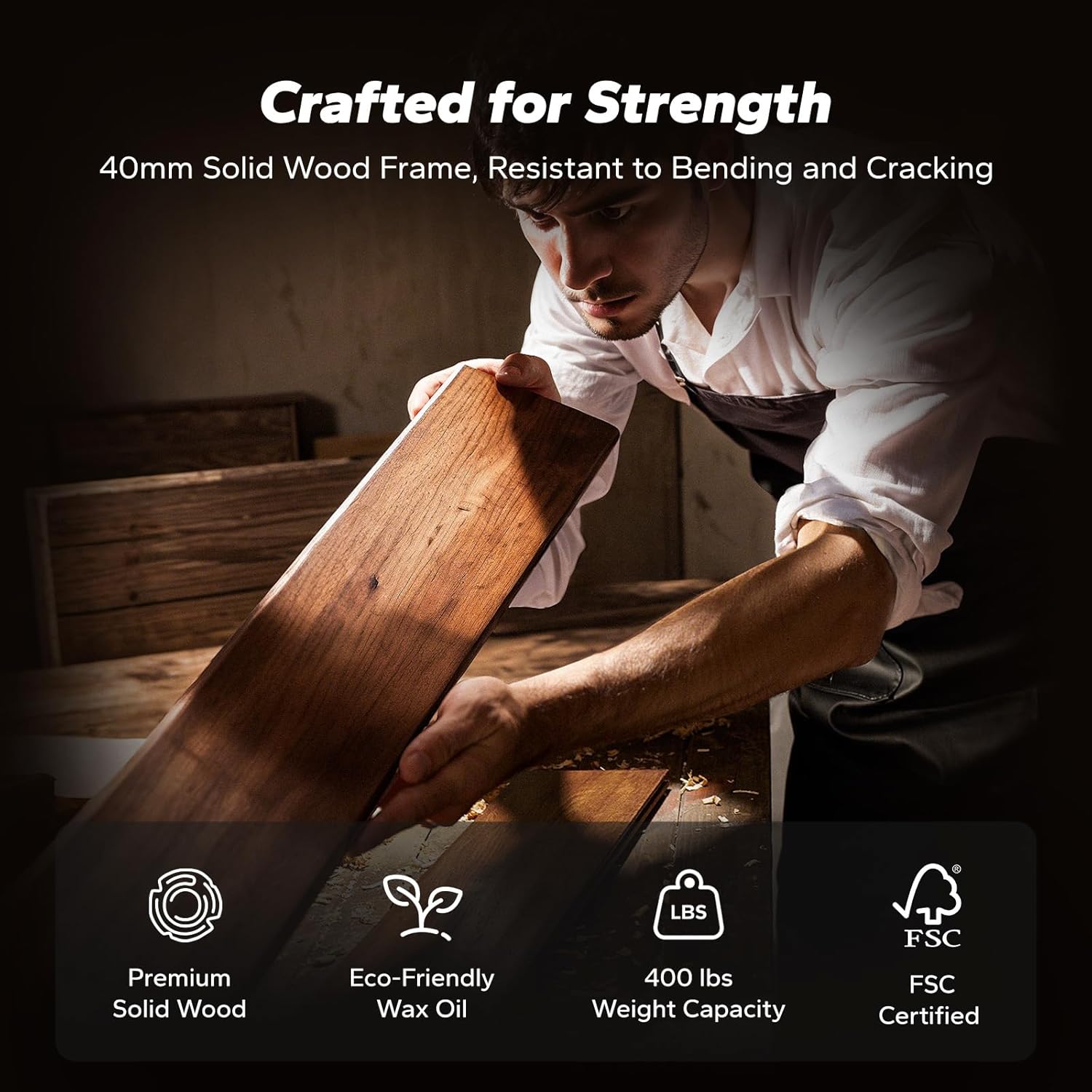
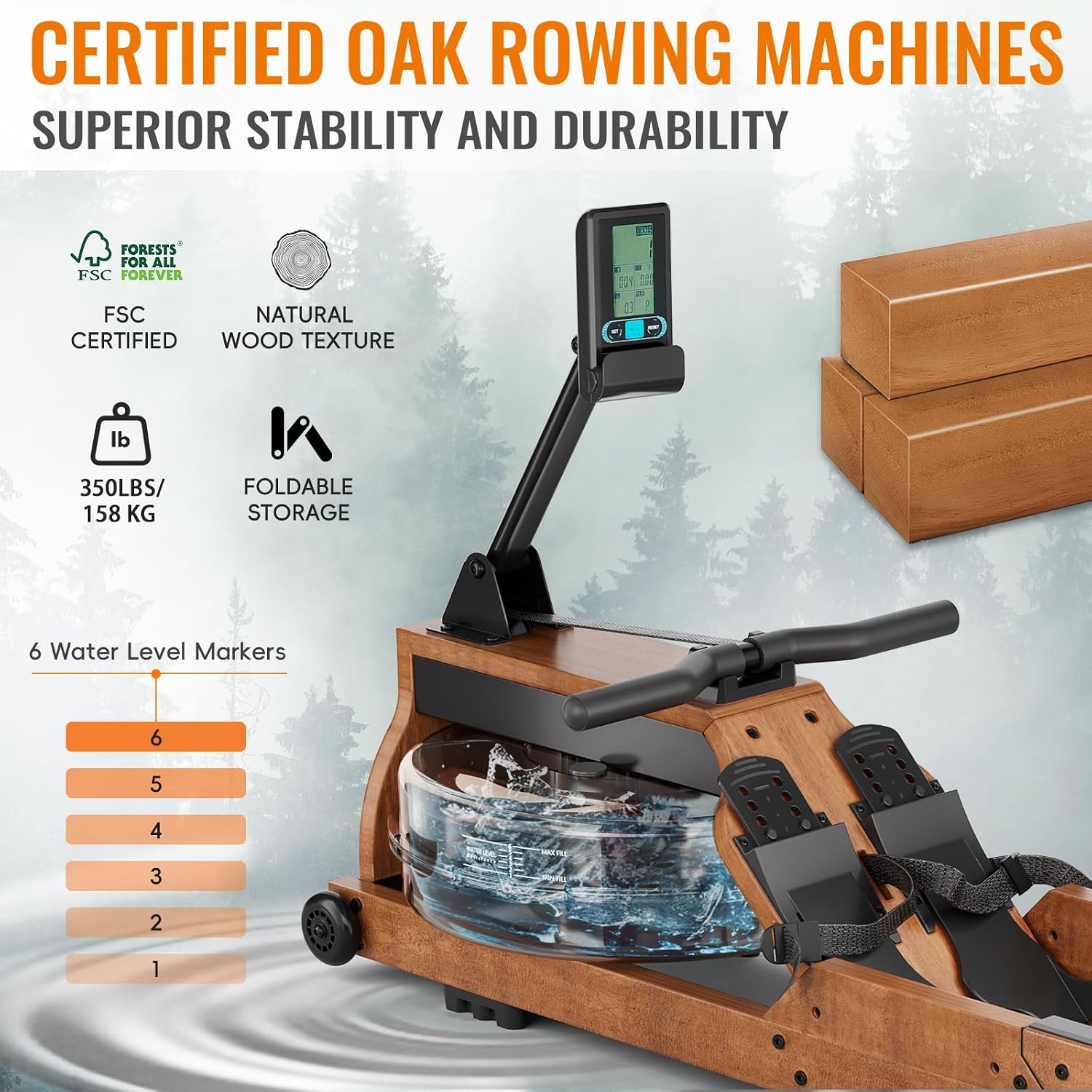
Budget water rowers ($250–$450) include models from brands like Sunny Health & Fitness, XTERRA Fitness, and Merax. They use the same basic physics as the WaterRower — a sealed water tank, an impeller (paddle wheel), and a handle connected by a bungee or nylon strap. They’re almost universally made with MDF (medium-density fiberboard) or lower-grade hardwood, and they ship from overseas manufacturers.
The WaterRower Club ($1,195–$1,250 as of mid-2026, per WaterRower’s published pricing) is built from solid ash — hand-finished — in the brand’s South Warren, Massachusetts facility. It was originally designed for commercial gym environments, which is where the “Club” designation comes from. It’s rated for continuous institutional use, not just home workouts.
That manufacturing origin story matters more than it might sound. Let’s walk through the actual gaps.
The Four Places the Money Goes
Frame Materials and Build Longevity
WaterRower
$1,298.00
In stock on Amazon
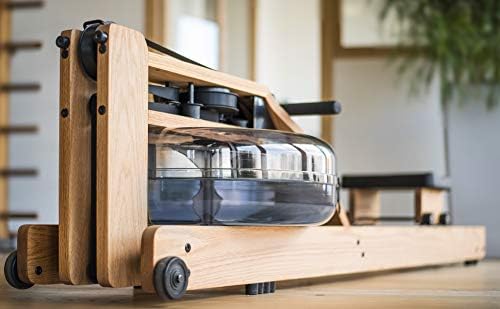
Check price on AmazonWaterRower’s published specification sheets list the Club model’s frame as solid ash with a honey oak finish, designed to meet commercial-use durability standards. The wood is kiln-dried to resist warping. The rail — the track your seat slides along — is dual aluminum, rated for users up to 700 lbs.
Budget competitors typically spec out their frames in two ways: MDF panels (which look like wood but are engineered composite) or lower-grade softwood. Verywell Fit’s “Best Rowing Machines of 2025” roundup notes that budget water rowers in the sub-$400 range show their construction quality most clearly over time, with owners frequently reporting creaking joints and seat-slide wobble after 12–18 months of regular use.
Wirecutter’s “The Best Rowing Machine” guide echoes this, noting that the WaterRower’s build quality represents a genuinely different category from budget water rowers — not a marginal upgrade.
The honest math: If you row five days a week, a budget model may last 2–3 years before mechanical degradation affects the experience. The WaterRower Club, used in commercial settings, routinely runs 7–10 years with basic maintenance per WaterRower’s own care documentation. Amortized over 7 years, a $1,200 purchase comes to roughly $171/year. A $350 budget rower replaced every 2.5 years costs $140/year — close, but that assumes the budget unit doesn’t degrade noticeably before replacement, which owner reviews suggest is optimistic.
MERACH
$279.99
In stock on Amazon
Check price on AmazonThe Water Tank and Rowing Feel
WaterRower
$1,298.00
In stock on Amazon
Check price on AmazonBoth tiers use water resistance, but the tank design matters. WaterRower’s Series 4 water tank is a precision-molded polycarbonate unit with a calibrated fill level that corresponds to specific resistance settings — think of it like resistance levels 1 through 20, each corresponding to a water volume. WaterRower publishes these calibration targets explicitly in their product documentation.
Budget tanks are typically smaller-volume units with less engineering precision. The resistance curve — how drag builds as you pull harder — tends to feel less smooth at the catch (the beginning of the stroke, when the handle first engages). Men’s Health’s “Best Rowing Machines Tested and Reviewed” describes this as a choppier feel in budget water rowers versus the glassy, progressive resistance of well-engineered water tanks.
For casual users rowing 20 minutes three times a week, this difference is real but livable. For athletes training split times, or anyone doing structured interval work such as 4×500m pieces, the inconsistency in resistance feel makes pacing harder and reduces the workout’s value as training data.
MERACH
$279.99
In stock on Amazon
Check price on AmazonMonitor and Performance Tracking
WaterRower
$1,298.00
In stock on Amazon
Check price on AmazonThis is where the tiers diverge most sharply for serious users.
- WaterRower Club S4 monitor: displays time, distance, speed, watts, calories, stroke rate
- Budget water rowers (typical): time, stroke count, calories — sometimes distance, rarely pace
- Concept2 RowErg PM5 (for context): all of the above plus pace per 500m, heart rate, interval programming, and Bluetooth/ANT+ connectivity — available at the $900 list price per Concept2’s published product page
If you’re training with any structure — even something as simple as holding a 2:10 split for 10 minutes — most budget water rowers simply can’t display the metric you need (pace per 500 meters, or watts). The WaterRower Club’s S4 monitor covers the basics well, though it doesn’t match the Concept2 PM5’s depth of interval programming. WaterRower sells an upgrade path to their S5 monitor for connectivity features.
For casual fitness users, basic calorie and time displays may be sufficient. For anyone with performance goals, the monitor gap between budget and WaterRower Club is more decisive than the frame gap alone.
MERACH
$279.99
In stock on Amazon
Check price on AmazonWarranty and Commercial Eligibility
WaterRower
$1,298.00
In stock on Amazon
Check price on AmazonWaterRower backs the Club model with a 5-year frame warranty and 3 years on mechanical components — explicitly covering commercial use, per WaterRower’s published warranty terms. That commercial-use coverage is rare and operationally significant if you’re buying for a studio, CrossFit box, or boathouse.
Budget water rower warranties typically run 1 year on the frame and 90 days on components, and universally exclude commercial use. If you’re buying for a small studio or training facility, a budget water rower isn’t just a quality compromise — it voids the warranty the moment it’s used in a commercial environment.
MERACH
$279.99
In stock on Amazon
Check price on AmazonWho Should Buy Budget, and Who Should Buy WaterRower Club
This is where we get direct.
The Case for a Budget Water Rower
MERACH
$279.99
In stock on Amazon
Check price on AmazonBuy a budget water rower if:
- You’re a first-time rower testing whether rowing will stick as a habit before committing $1,200 or more
- Your sessions will be three times a week or fewer, under 30 minutes, with no structured training goals
- You’re furnishing a secondary space — a vacation home or small apartment — where the machine gets occasional use
- Your total budget genuinely caps at $400 and a Concept2 RowErg isn’t an option
The budget tier delivers the core water-resistance experience at a price that makes it a reasonable experiment. The ceiling is low, but so is the financial risk if rowing doesn’t stick.
The Case for the WaterRower Club
WaterRower
$1,298.00
In stock on Amazon
Check price on AmazonBuy the WaterRower Club if:
- You’ve confirmed rowing is part of your long-term fitness routine and you want a machine you won’t outgrow
- You’re training with any kind of structure — pace targets, watt targets, interval programs
- You’re buying for commercial use, in which case the budget tier is simply ineligible by warranty terms
- Aesthetics matter to you: the WaterRower’s solid-wood construction is genuinely beautiful in a home gym, and editorial sources including Wirecutter’s “The Best Rowing Machine” and Verywell Fit’s “Best Rowing Machines of 2025” consistently cite owner satisfaction with the build and visual quality
- You plan to own the machine for five or more years
The Honest Alternative: Concept2 RowErg
Water
$299.99
In stock on Amazon
Check price on AmazonIf your primary goal is performance tracking and structured training — and aesthetics are secondary — the Concept2 RowErg at $900 list price beats both tiers on data depth, Bluetooth connectivity, and community adoption. Per Wirecutter’s “The Best Rowing Machine,” the RowErg remains the default recommendation for performance-focused buyers. It’s the standard tool used in competitive rowing programs worldwide, documented on Concept2’s own product page and corroborated by Men’s Health’s “Best Rowing Machines Tested and Reviewed.”
The WaterRower Club wins on feel and aesthetics. The Concept2 wins on training data depth. Both outperform the budget tier over any ownership window longer than two years.
A Note on the “It’s the Same Water Resistance” Argument
You’ll see this framing in budget product listings: “Same water resistance technology as premium brands.” It’s technically true in the way that a $200 acoustic guitar and a $2,000 acoustic guitar both use steel strings and a spruce top. The physics are shared. The engineering precision, materials, and longevity are not.
Across editorial reviews in Verywell Fit’s “Best Rowing Machines of 2025” and Men’s Health’s “Best Rowing Machines Tested and Reviewed,” the pattern is consistent: budget water rowers satisfy casual users for one to two years and then become a source of frustration as the frame loosens, the seat wobbles, or the pull strap frays. WaterRower Club owners consistently report the machine remaining a daily-driver at the five- and seven-year mark with minimal maintenance — a pattern reflected in the long-run editorial consensus from Wirecutter’s guide, which notes the Club’s commercial-grade construction as a distinguishing feature.
The Decision Rule
Here it is, plainly:
If you are serious enough about rowing to be reading a comparison article, you are probably serious enough to justify the WaterRower Club — or to consider the Concept2 RowErg first.
The $900 gap is real money. But the budget tier’s ceiling is low. It works as a trial-run purchase for true beginners or occasional users. For anyone training with intent, buying for commercial use, or building a home gym they want to be proud of for years, the budget tier’s cost-per-use math and capability gaps make the WaterRower Club the better long-term investment — and the Concept2 RowErg the better performance investment — every time.
If the WaterRower Club’s price point is genuinely out of range right now, the cleaner move is to save for an additional two to three months rather than settle for a machine you’ll likely replace. The editorial consensus reflected in Wirecutter’s “The Best Rowing Machine,” Verywell Fit’s “Best Rowing Machines of 2025,” and Men’s Health’s “Best Rowing Machines Tested and Reviewed” is that the mid-tier water rower market between $400 and $900 is sparse for good reason: the WaterRower Club and the Concept2 RowErg own that upper range so thoroughly that there isn’t much worth buying between them and the budget floor.
Start at the right level for your goals. The machine that frustrates you is never the bargain it looked like on the product page.