May 26, 2026 • Priya Nambiar • 8 min reading time • Prices verified June 18, 2026
Rowing Machine Seat Cushions: How to Make Your Concept2 Actually Comfortable
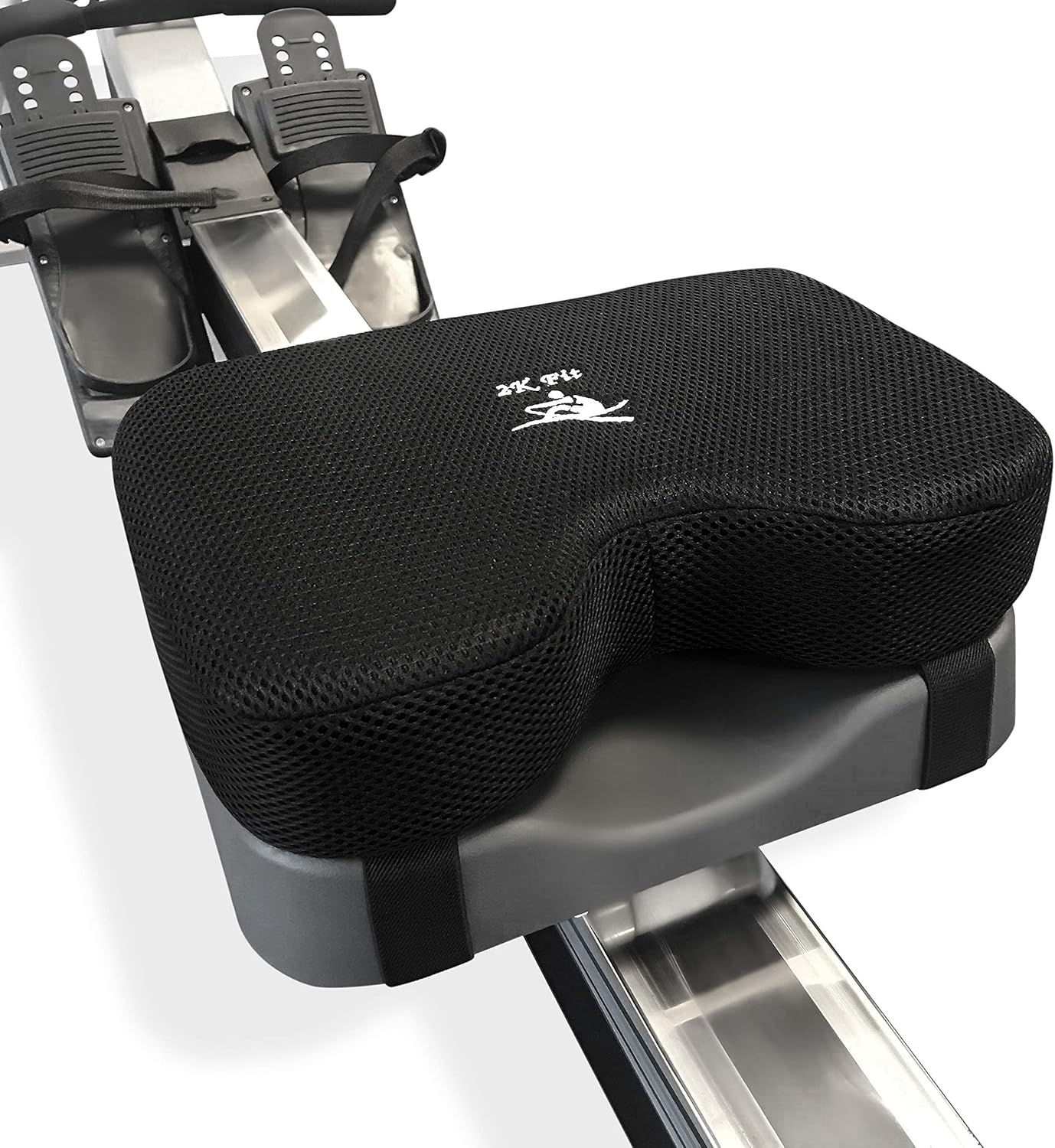
If you’ve ever sat down on a Concept2 RowErg — that’s the gold-standard rowing machine you’ll see in gyms, boathouses, and competitive training facilities — you know the seat is not exactly plush. It’s a hard molded plastic shell, functional and durable, but after about twenty minutes your sit bones (the bony points at the base of your pelvis that bear most of your weight when seated) start sending you pointed feedback. For shorter workouts this is a non-issue. But as your sessions stretch toward 45 minutes, an hour, or the kind of steady-state distance work serious rowers build into their programming, that seat becomes the limiting factor — not your lungs, not your legs. A rowing machine seat cushion is exactly what it sounds like: a thin pad that attaches to or sits on top of the seat to redistribute pressure and reduce discomfort. This article will walk you through how to choose one, what actually matters in the specs, and whether you even need one at all.
| EDITOR'S PICK[Rowing Machine Seat Cushion (Mo…](https://www.amazon.com/dp/B0GRYKZNR8?tag=greenflower20-20) | Mid-tierRowing Machine Seat Cushion Com… | Budget pickRowing Machine Seat Cushion fit… | |
|---|---|---|---|
| Material | Memory Foam | Gel | — |
| Washable | ✓ | — | — |
| Straps | ✓ | — | — |
| Compatibility | Concept2 | Concept2, Hydrow, Peloton | Concept2, Hydrow |
| Price | $39.99 | $29.99 | $19.99 |
| See on Amazon → | See on Amazon → | See on Amazon → |
Why the Concept2 Seat Feels the Way It Does (and Why That’s Not a Bug)
Concept2 designed the RowErg seat to prioritize durability, easy replacement, and consistent ergometer performance across thousands of machines — requirements that matter when you’re supplying rowing clubs, CrossFit boxes, and university programs at scale. A softer, more padded OEM seat would compress unevenly over time, change your seated position, and potentially affect the consistency that makes Concept2 the de facto standard for competitive benchmarking. Concept2’s own product FAQ acknowledges that the seat is intentionally firm and notes that replacement seat options are available, but the stock unit is optimized for performance, not cushioning.
The tradeoff is real, though. According to Verywell Fit’s overview of rowing machine ergonomics, extended seated rowing creates sustained pressure on the ischial tuberosities — your sit bones — in a way that upright bike seats or treadmills simply don’t replicate. You’re sliding back and forth through each stroke, which means pressure points shift but never fully release. For recreational rowers doing 20-minute sessions three times a week, this barely registers. For athletes logging 60-90 minute endurance rows, or coaches running back-to-back class sessions, it becomes a genuine training interruption.
The practical fix is a seat cushion. It’s not a premium product category — most options run $15–$60 — but picking the wrong one creates its own problems.
What to Actually Look for in a Rowing Seat Cushion
Not all seat cushions are built for rowing’s specific demands. A regular office chair pad will shift around, bunch up under your legs, and potentially interfere with your catch position (the compressed forward position at the start of each stroke where your knees are fully bent). Here’s what separates a rowing-specific cushion from a generic pad.
Cutout geometry matters more than total thickness. The most widely recommended rowing cushions use a center cutout or contoured relief channel — a gap or carved section in the foam or gel that takes pressure off the tailbone and perineal area (the soft tissue between your sit bones). Without this, adding cushioning can paradoxically increase pressure on the central soft tissue while relieving the sit bones. Men’s Health’s rowing machine guides have consistently flagged this as the key differentiator between purpose-built rowing pads and generic cushions repurposed from cycling or office use.
Attachment matters. The Concept2 seat has a specific shape and a slick surface. Cushions that rely solely on friction will migrate during the drive phase (the power stroke when you push back hard with your legs). Look for either elastic straps that wrap around the seat shell, silicone grip backing, or a design specifically sized to the Concept2 seat profile. Owners across long-run reviews frequently cite slippage as the primary complaint with budget options.
Thickness versus range of motion. A pad that’s too thick raises your seated height slightly, which can affect your shin angle at the catch. For most recreational rowers this is trivially small. For competitive rowers who’ve dialed in their foot stretcher position (the adjustable footplate that sets your feet during rowing) and are training to specific split-time targets, even a centimeter of height change can shift mechanics. Keep thickness under 1.5 inches (about 38mm) unless you’re explicitly testing the effect on your form.
Foam versus gel. Closed-cell foam is lighter, dries faster after sweaty sessions, and holds its shape longer. Gel inserts offer better pressure distribution initially but can bottom out (compress fully and lose cushioning effect) faster under higher body weights or sustained use. Owners consistently report that gel-foam hybrid designs offer a reasonable middle ground, but pure gel pads tend to degrade faster in high-use environments — something commercial buyers equipping a fleet of machines should weigh carefully.
By the Numbers
| Feature | Budget range ($15–$25) | Mid-range ($30–$50) | Purpose-built ($50–$80) |
|---|---|---|---|
| Attachment method | Friction / generic straps | Elastic + silicone grip | Machine-specific straps |
| Cutout geometry | Rare | Common | Standard |
| Typical thickness | 10–20mm | 15–25mm | 15–30mm with relief channel |
| Durability (owner reports) | 6–12 months daily use | 1–2 years | 2+ years |
The Form Trade-Off: When a Cushion Might Be Working Against You
Here’s the honest version of a conversation most cushion product pages skip: if you’re experiencing significant seat discomfort in the first few weeks of rowing, part of the problem might be form, not the seat. Harvard Health Publishing’s core stability research reinforces what rowing coaches have documented for decades — rowers who aren’t engaging their core throughout the drive phase tend to collapse onto the seat and rock onto the tailbone during the recovery phase (the return slide toward the machine’s flywheel). That collapsing motion creates exactly the kind of sustained tailbone pressure a cushion can’t fully solve.
Outside Online’s coverage of indoor rowing training for endurance athletes has noted that new rowers often underestimate how much continuous core engagement rowing requires — it’s not just a leg and back movement. A seat cushion that eliminates all discomfort might mask a form issue worth addressing through coaching or video review before it compounds over months of training.
That said, if you’re past the beginner stage, have worked on your stroke mechanics, and are simply trying to sustain longer sessions comfortably, a cushion is a completely legitimate tool. Professional rowers in long-distance competitions (think the annual Boston to New York indoor rowing challenges, or multi-hour ergathons) routinely use seat pads. Dismissing cushions as a crutch for bad form is overcorrecting in the other direction.
Decision Framework: Which Option Fits Your Situation
Rather than ranking every cushion on the market, here’s the cleaner decision logic based on what your training actually looks like.
If your sessions are under 30 minutes and you’re a recreational rower: You probably don’t need a cushion yet. Give your body 4–6 weeks to adapt to the seat. Seat discomfort in the first few weeks often resolves as your glutes and hip flexors condition to the rowing position.
If you’re logging 45+ minute steady-state rows or interval sessions: A mid-range gel-foam hybrid with a tailbone relief cutout is worth the $35–$50. Look specifically for elastic strap attachment to the Concept2 seat profile. Owners consistently report this is the upgrade that unlocks longer training blocks without a form breakdown from distraction.
If you’re a coach or commercial buyer outfitting multiple machines: The math favors buying purpose-built machine-specific pads at the $50–$80 tier. Cheaper pads in high-use environments need replacing frequently enough that the per-unit savings disappear within a year. Buy two or three per machine if your classes involve back-to-back users, since the gel needs time to return to shape between sessions.
If you’re a competitive rower or performance-focused athlete: We’d suggest caution about thick pads. Stay at or under 15–20mm, prioritize a relief channel over total cushion volume, and be willing to reassess your foot stretcher position after introducing a cushion — even a modest height change can affect your effective power curve. Some competitive rowers prefer a simple neoprene cover over bare plastic, which takes just enough edge off the firmness without meaningfully altering mechanics.
If you own a WaterRower, Hydrow, or Ergatta: The seat shapes vary by machine, and the universal-fit straps on most Concept2-optimized cushions won’t always translate cleanly. The Hydrow and Ergatta seats tend to be slightly more padded from the factory, so this is more of a Concept2-specific pain point. WaterRower seats have a similar hard-shell design and respond well to the same cushion category.
The Bigger Picture
A seat cushion is probably the cheapest performance investment in rowing — $30–$50 versus hundreds or thousands of dollars of machine or subscription cost. But it’s also easy to over-engineer this decision. Most rowers who’ve been at it for six months land on a simple, mid-range foam-gel hybrid pad with proper attachment straps and don’t think about it again for two years.
The cleaner question to ask before buying: is the seat discomfort stopping me from completing the session I planned, or just present in the background? If it’s stopping you, fix it. If it’s background noise, spend that $40 on a heart rate monitor instead.
For most rowers who train on a Concept2 and have moved past beginner sessions, the answer is yes — get a cushion designed for rowing, make sure it has a tailbone cutout, confirm the attachment will hold through hard drive strokes, and keep the thickness modest enough that your mechanics don’t shift. That’s the whole decision. The rest is detail.