June 3, 2026 • Priya Nambiar • 9 min reading time • Prices verified June 18, 2026
Rowing Machine Floor Mats: Stop Your Rower from Wrecking Your Floors
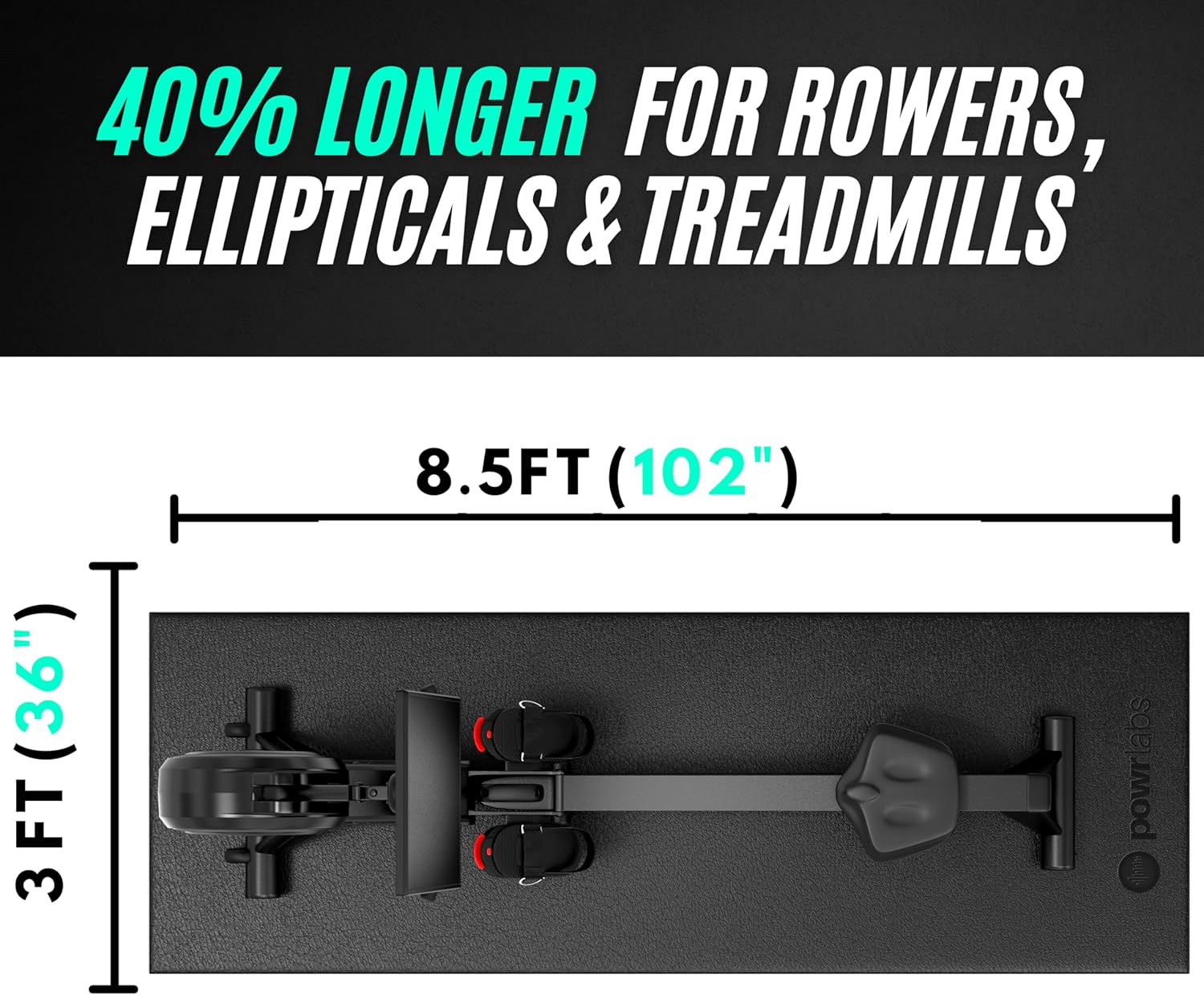
A rowing machine — the long, sliding-rail device you sit on and pull a handle to simulate the motion of rowing a boat — is one of the best full-body cardio tools you can put in a home gym. But it has a quirk most buyers don’t think about until after delivery day: it moves. Every stroke sends a small shockwave through the frame, and over weeks of training, that motion can scratch hardwood floors, leave permanent impressions in vinyl planks, crack rubber floor tiles, and walk the entire machine several inches from its starting position. A purpose-built floor mat — a dense, grippy pad that sits under the rower and absorbs that energy — is the simplest, cheapest fix. This guide will tell you exactly what to look for, what the specs actually mean, which categories of mat earn their price, and how to make the right call for your specific machine and floor.
If you already know the difference between a PVC mat and an EVA foam tile and you’re just here to nail down thickness and size, skip ahead. If you’re starting from scratch, keep reading — we’ll cover everything.
| EDITOR'S PICK[Hydrow Under Machine Mat for Ex…](https://www.amazon.com/dp/B0844J5GXG?tag=greenflower20-20) | Mid-tier[MOTIONTEX Fitness Equipment Mat…](https://www.amazon.com/dp/B0BG5YDSK8?tag=greenflower20-20) | Budget pick[Double Mat Compatible with Pelo…](https://www.amazon.com/dp/B0BHVSHM6D?tag=greenflower20-20) | |
|---|---|---|---|
| Dimensions | 3'L x 7.5'W | 96"L x 30"W | 11.8"x24" |
| Thickness | — | 0.1" | 6mm |
| Non-slip | ✓ | — | — |
| Floor protection | ✓ | — | — |
| Suitable for rower | ✓ | — | ✓ |
| Price | $90.00 | $45.75 | $19.99 |
| See on Amazon → | See on Amazon → | See on Amazon → |
Why a Mat Matters More Than You Think
Most people assume a mat is just a mat. In the rower world, that assumption costs floors.
The Concept2 RowErg — the gold standard ergometer (a machine that measures the work you’re doing) used everywhere from boathouses to CrossFit boxes — weighs roughly 57 lbs and sits on two molded plastic feet at the front and a pair of wheels at the rear. Verywell Fit’s home-gym setup guide specifically flags that hard plastic feet on any rowing machine will abrade unprotected hardwood or luxury vinyl plank (LVP) flooring within weeks of regular use. The damage isn’t cosmetic drama — it’s the kind that voids your floor warranty.
Beyond surface protection, there are three practical problems a mat solves:
1. Slide and creep. During the drive phase of a rowing stroke — the explosive push with your legs — the machine experiences a backward reactive force. On hard floors, this nudges the rower rearward stroke by stroke. After a 20-minute session, you can find yourself a foot from where you started, which is genuinely dangerous near walls or equipment racks.
2. Noise and vibration transmission. Rowing machines are quieter than treadmills, but the footrest and seat rail create low-frequency vibration that travels through joists into rooms below. This matters enormously for apartment rowers and anyone with a second-floor gym space. A dense mat decouples the machine from the structural floor.
3. Sweat and water ingress. The WaterRower Club, with its water flywheel (the tank of water that creates resistance), can develop minor condensation around the tank. The Hydrow and Ergatta have electronics mounted low on the frame. Neither manufacturer wants their machine sitting in pooled sweat on an unprotected floor. Concept2’s RowErg owner’s manual recommends placing the machine on a protective mat and wiping the area down after each session.
The Specs That Actually Matter — and the Ones That Don’t
Walk into any fitness equipment retailer or scroll through Amazon and you’ll see mats marketed with a lot of numbers. Here’s what to pay attention to:
Thickness This is the single most important spec. Wirecutter’s exercise equipment mat coverage identifies a practical threshold: mats under 3mm offer almost no vibration dampening and minimal scratch protection — they’re better than nothing but not by much. The useful range for rowing machines starts at 6mm for hard, level floors like concrete or ceramic tile, and goes up to 8–10mm for hardwood and LVP where you want maximum cushioning between the machine and the surface. Beyond 10mm, you risk a spongy feel that can make the rower’s feet feel unstable during the stroke — owners on long-run aggregated reviews consistently note that ultra-thick foam mats (12mm+) designed for weight-room deadlifting feel “mushy” under a rower.
Material: PVC vs. Rubber vs. EVA Foam
- PVC (polyvinyl chloride) mats are the most common category in the $30–$80 range. They’re dense, non-porous, easy to wipe down, and dimensionally stable (they don’t stretch or compress permanently). The tradeoff: some PVC products off-gas a noticeable smell for the first few weeks, and a small percentage of owners with chemical sensitivities report ongoing irritation. If you’re in a well-ventilated space, this is often a non-issue.
- Recycled rubber mats, often sold in 3x6 ft or 4x6 ft panels, are the material of choice in commercial gyms. Men’s Health’s home gym flooring guide notes that recycled rubber at 6–8mm provides superior grip, handles heavier equipment, and resists compressive set (the permanent dent left by a heavy load over time) far better than PVC or foam. They’re heavier to handle and more expensive — typically $60–$150 for rower-sized dimensions — but they last years under daily commercial use.
- EVA foam tiles (the interlocking puzzle-piece style) are the budget entry point. They’re lightweight, customizable in size, and easy to replace single tiles. The limitation is durability under point-load stress: the plastic feet on a Concept2 or the hardwood base rails on a WaterRower can compress EVA tiles into permanent grooves over 6–12 months of regular use. EVA makes sense as a temporary solution or for very occasional use.
Size A rowing machine’s footprint is longer than most people expect. The Concept2 RowErg occupies roughly 8 feet by 2 feet when the monorail is fully extended. The WaterRower Club is similarly long. Our recommendation: size your mat at minimum 4 feet wide by 8 feet long. The extra width matters because your feet can come off the footrests during warmup adjustments, and you want cushioning where you’re standing, not just under the machine. If you’re working with a 3x6 mat, you’ll likely need to butt two together — which works fine as long as you tape the seam with rubber-backed floor tape to prevent edge curl.
By the Numbers
| Mat Type | Typical Thickness | Price Range (2026) | Best For |
|---|---|---|---|
| PVC equipment mat | 6–8mm | $35–$85 | Home gym, hardwood/LVP |
| Recycled rubber panel | 6–8mm | $60–$150 | Commercial use, concrete |
| EVA foam tile (4-pack) | 10–12mm | $25–$55 | Temporary / budget setups |
Matching the Mat to Your Machine
Not every rower puts the same stress on a floor, and the mat choice should reflect that.
Concept2 RowErg and RowErg Sport: These machines have hard polymer feet at the front and rear wheels. The rear wheels mean the back third of the mat needs grip more than cushioning — the wheels can roll forward on a slick mat surface. Owners consistently report that a PVC or rubber mat with a textured top surface keeps the RowErg locked in place better than a smooth mat. For home use on hardwood or LVP, a 6mm PVC mat rated for equipment (not yoga — yoga mats are too thin and narrow) is the practical minimum. For a commercial facility running multiple RowErgs on concrete, 6mm recycled rubber panels are worth the higher upfront cost given the volume of daily use.
WaterRower Club and WaterRower Natural: The WaterRower’s solid ash or hardwood base rails distribute weight differently than foot-mounted machines — the load is spread along the full length of the rail rather than concentrated at two or four points. This actually reduces point-load stress on the mat but increases the total footprint area you need to protect. The aesthetic consideration matters here too: WaterRower owners tend to be design-conscious buyers, and a clean black rubber mat or a dark PVC pad complements the wood frame better than a brightly colored EVA tile grid.
Hydrow and Hydrow Wave: Hydrow’s owner community, aggregated across multiple long-run reviews, flags that the Hydrow’s electromagnetic resistance flywheel creates more low-frequency vibration than a water or air resistance machine. If you’re on a suspended wood floor above a finished basement or living space, a 8mm rubber mat is worth the premium specifically for vibration isolation. The Hydrow weighs approximately 145 lbs with its large touchscreen, so compressive resistance (the mat’s ability not to permanently deform under weight) is more important here than with lighter machines.
Ergatta: Similar machine footprint and weight profile to the Hydrow Wave. Ergatta’s game-based interface means users sometimes shift weight or adjust position mid-session, so a mat that stays flat at the edges — no curling — is important. Rubber-backed PVC mats with beveled edges consistently earn better long-run reviews than flat-edge alternatives for this reason.
What to Skip, and When to Spend More
Skip: Yoga mats, bathroom anti-slip mats, and decorative area rugs. None of these provide the density or dimensions needed for a rowing machine, and all three create a secondary hazard — if they compress unevenly or bunch under the machine, they can introduce instability into your stroke.
Skip: “Treadmill mats” marketed specifically for treadmill use unless the spec sheet confirms they’re rated for equipment over 100 lbs and at least 6mm thick. Many treadmill mats are 3mm or less and designed primarily to prevent motor vibration noise, not to protect floors from hard plastic feet.
Worth the extra spend: If you’re outfitting a commercial facility — a rowing club, CrossFit box, or university athletic program — a higher upfront investment in 8mm recycled rubber makes straightforward economic sense. The cost-per-use math strongly favors rubber over PVC in commercial settings: rubber panels rated for commercial gym use routinely last 5–10 years under daily multi-user conditions, whereas PVC mats typically show wear and compression at the 2–3 year mark under similar load.
The Decision Rule
If you’re still trying to nail down the right call, here’s the simplified version:
- If you have hardwood, LVP, or vinyl tile at home: 6–8mm PVC equipment mat, sized 4x8 ft minimum. Budget $40–$80.
- If you have concrete (basement or garage gym): 6mm recycled rubber, 4x6 ft or larger. Budget $70–$120.
- If you’re on a wood-frame floor above a living space: 8mm rubber for vibration isolation. Don’t compromise on this one.
- If you’re buying for a commercial facility with 3+ machines: Rubber panels, commercial-rated. Calculate by total machine footprint plus 12 inches on each side, and get a quote for fleet pricing — most commercial suppliers offer it.
- If you’re in a temporary space or on a tight budget: EVA foam tiles work for now. Plan to replace them within 12–18 months of regular use.
The mat is a $50–$150 decision that protects a floor that costs orders of magnitude more to repair or replace. Concept2’s own documentation recommends a protective mat as standard practice — that’s as close to a manufacturer mandate as you’ll get. Get the right one before the rower goes down.