May 19, 2026 • Priya Nambiar • 9 min reading time • Prices verified June 18, 2026
Resistance Bands for Rowers: The Cross-Training Kit That Fills Your Off-Day Gaps
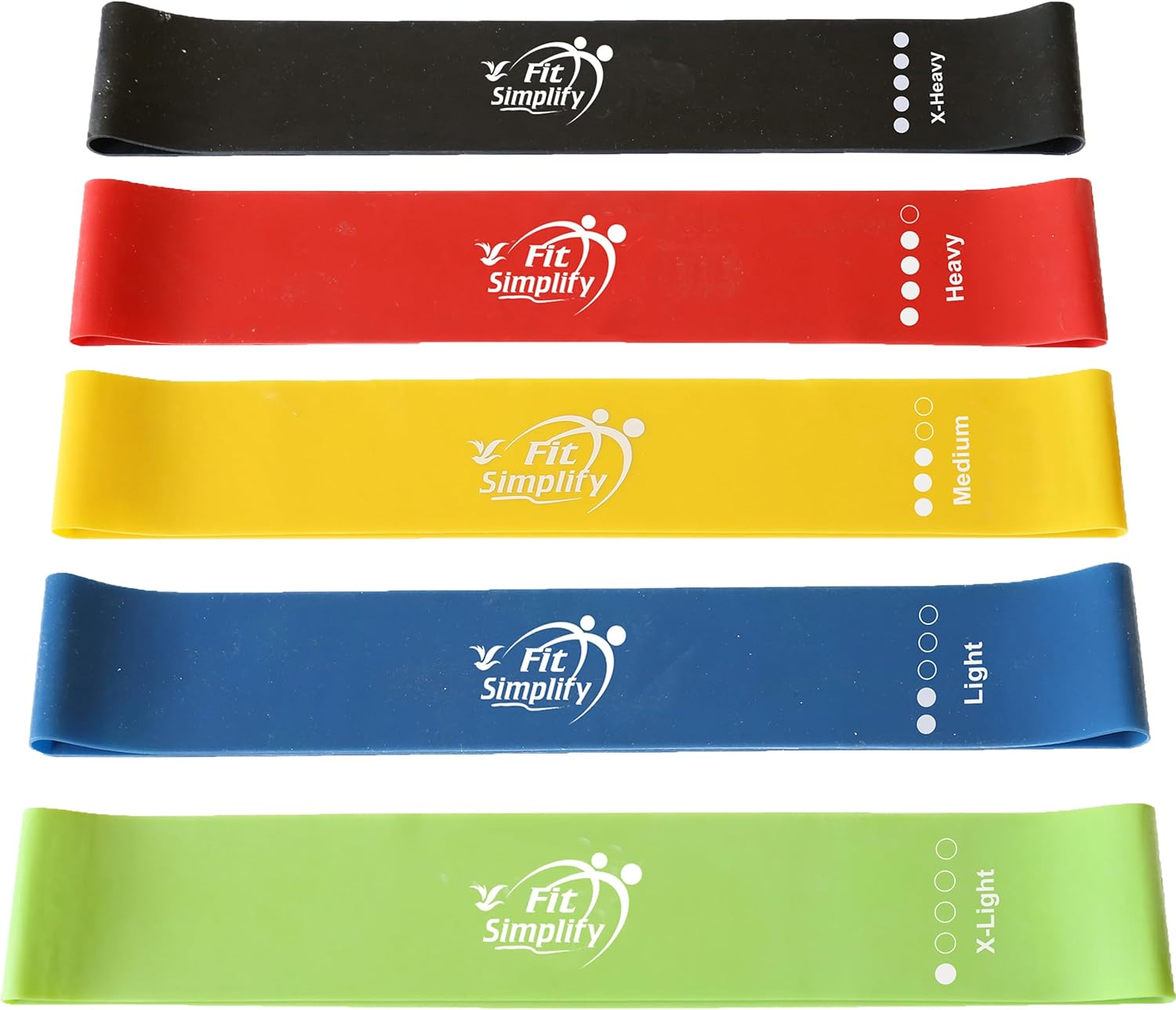
If you row with any regularity — even two or three sessions a week on a Concept2 or WaterRower — you’ve probably noticed that your body needs something on the days between. Not another full erg session, which would just stack fatigue, but something targeted: a way to reinforce the muscles that rowing loads hardest (your lats, rhomboids, hamstrings, and core) while also addressing the ones rowing tends to neglect (your hip flexors, rotator cuffs, and anterior shoulder). Resistance bands — thick rubber or latex loops and tubes that create tension as you stretch them — are the single most practical tool for filling that gap. They’re inexpensive, take up almost no space, and can replicate or complement nearly every movement pattern in the rowing stroke. This guide will help you pick the right set, understand where each band type earns its place, and build a simple off-day framework that actually makes you faster on the water or the erg.
| EDITOR'S PICK[Bodylastics Patented Basic Seri…](https://www.amazon.com/dp/B006O09M4K?tag=greenflower20-20) | Mid-tier[WHATAFIT Resistance Bands](https://www.amazon.com/dp/B07DWSPQQY?tag=greenflower20-20) | Budget pick[THERABAND Resistance Bands Set](https://www.amazon.com/dp/B00UCHA00Q?tag=greenflower20-20) | |
|---|---|---|---|
| Resistance Level | 280 lbs max | 5 Levels | — |
| Accessories | 2 Handles, 2 Ankle Straps, 1 Door Anchor, 1 Carry Bag | Handles, Ankle Straps, Door Anchor | — |
| Latex Free | — | — | Non-Latex |
| Carry Bag | ✓ | — | — |
| Price | $61.97 | $27.97 | $11.50 |
| See on Amazon → | See on Amazon → | See on Amazon → |
Why Rowers Specifically Benefit From Band Training
Rowing is a posterior-chain-dominant sport. Almost every power phase — the drive, where you push with your legs and pull with your back and arms — loads the back of your body: glutes, hamstrings, spinal erectors, lats, rear deltoids. The recovery phase (sliding back up to the catch) is comparatively passive. That imbalance, repeated over thousands of strokes, creates predictable compensations: tight hip flexors from the compressed catch position, overworked lats relative to undertrained rotator cuff stabilizers, and a core that’s trained to brace but not always to rotate or extend under load.
Concept2’s published training resources specifically recommend resistance band exercises as part of a rower’s cross-training program, calling out banded pull-aparts and hip activation work as direct complements to erg training. Harvard Health Publishing’s overview of strength training confirms that variable-resistance tools like bands are particularly effective at improving joint stability — which matters enormously for rowers, whose shoulders and knees absorb cumulative load across long training blocks.
Outside Online’s analysis of endurance athletes and strength training makes the underlying case clearly: aerobic athletes who add two structured strength sessions per week see measurable gains in economy (efficiency of movement) without meaningfully increasing fatigue if the sessions are well-designed. Bands are well-suited to that constraint because they’re easy to modulate — you can do a 20-minute activation session before an erg piece or a 40-minute strength circuit on a true off day, without the systemic load of a barbell session.
The practical case: bands are also the one piece of equipment that makes sense for rowers traveling to regattas, or those who split time between a home erg and a club boathouse. A set of loop bands fits in a side pocket of a duffel bag.
Band Types and What Each One Is For
Not all resistance bands are the same tool. Buying the wrong style for your training goal is the most common mistake. Here’s the breakdown:
Flat loop bands (also called power bands or pull-up bands) These are the wide, flat rubber loops — often sold in sets ranging from a very light 5–15 lb equivalent resistance up to heavy 50–120 lb versions. They’re the most versatile band for rowers. You can anchor them to a squat rack or door frame for simulated rows, use them for hip activation (walking laterally with a band around your thighs), or loop them around a pull-up bar to assist pull-ups as you build pulling strength. Reviewers at Men’s Health consistently rate flat loop bands as the most durable option for high-frequency training, with the thicker heavy-gauge sets holding up significantly better over time than budget alternatives.
Mini loop bands (smaller fabric or rubber loops) These sit around your ankles or just above your knees and are almost exclusively used for glute and hip activation work — clamshells, lateral walks, monster walks, fire hydrants. For rowers, this work directly targets the glute medius, which controls pelvic stability during the drive. If your split times suffer when you’re fatigued in the final 500 meters of a 2K, weak lateral hip stability is a credible culprit. Fabric bands are generally preferred for skin comfort; rubber bands can slide or pinch.
Tube bands with handles These have a cylinder of rubber tubing with plastic or foam handles at each end. They’re comfortable for shoulder exercises — external rotation, face pulls, banded pull-aparts — but less versatile than flat loops for lower-body or barbell-adjacent movements. For rowers specifically concerned with shoulder health, a tube band set adds meaningful options.
By the numbers:
| Band Type | Best Rower Use Case | Typical Resistance Range | Avg. Price (set, 2026) |
|---|---|---|---|
| Flat loop (power band) | Simulated rows, pull-up assist, hip work | 5–120 lbs | $25–$65 |
| Mini loop (fabric) | Glute/hip activation, lateral stability | 5–40 lbs | $15–$35 |
| Tube with handles | Shoulder rehab/prehab, face pulls | 5–50 lbs | $20–$50 |
How to Build an Off-Day Band Routine That Actually Transfers
The goal is specificity: exercises that reinforce your stroke mechanics or fix known rower weak points, not a random collection of band movements. Verywell Fit’s overview of resistance band training emphasizes matching the exercise’s movement pattern to your primary sport — a principle called “transfer of training.” Here’s how that maps to rowing.
Activation block (10–12 minutes, pre-erg or morning of a rest day)
Start with mini loop work to fire up the posterior chain before anything else:
- Lateral band walks: 3 × 15 steps each direction
- Clamshells: 3 × 15 each side
- Glute bridges with band above knees: 3 × 20
This targets the exact hip stabilizers that tend to go quiet during high-volume erg training. Many rowers report that consistent glute activation work eliminates the lower-back fatigue they’d assumed was just part of rowing.
Pulling strength block (15–20 minutes, off days)
Using a flat loop band anchored at about chest height to a door frame or rack:
- Banded seated row: 3 × 12–15 (mimic the arm draw of the rowing stroke — elbows close to the body, finish at the lower ribs)
- Straight-arm lat pulldown: 3 × 12 (band anchored high; pull straight arms down to hips — isolates the lat connection that initiates the drive)
- Single-arm banded row: 3 × 10 each side (exposes and corrects asymmetries between your port and starboard pull)
Shoulder health block (10 minutes, 2–3x per week)
Rotator cuff work is boring, but rowers who neglect it eventually pay for it — the catch position puts the shoulder in a loaded, externally rotated position that accumulates stress:
- Band pull-aparts: 3 × 20 (hold band at shoulder width, pull apart to a T — rear delts and external rotators)
- Face pulls with tube band: 3 × 15 (anchored at face height, pull toward your face with elbows high)
- External rotation: 3 × 15 each side
Core anti-rotation block (10 minutes)
Rowing’s power transfer depends on a stable, non-rotating core. Banded Pallof presses directly train this:
- Pallof press: 3 × 10 each side (band anchored at chest height, press straight out and hold — your torso should resist any rotation toward the anchor)
Picking Your Set: Decision Rules for Different Rower Profiles
This is where the tradeoff math matters. You don’t need every band type, and buying a $90 comprehensive set when you only need two tools is waste.
If you’re a recreational rower (2–3 sessions/week, no structured programming): Start with a fabric mini loop set and one medium flat loop band. Total spend: $35–$50. The activation and shoulder work alone will meaningfully reduce injury risk, which is the biggest training disruptor at this level.
If you’re a performance-focused athlete running structured plans (intervals, 2K testing, tracked splits and watts): You need a full flat loop set (at least four resistance levels) plus a tube band for shoulder prehab. Budget $65–$100 for quality sets that won’t snap mid-season. Men’s Health’s 2025 band roundup recommends prioritizing bands from brands with explicit resistance ratings stamped on the band — not just color-coding — because resistance varies significantly between manufacturers using the same color conventions.
If you’re outfitting a rowing club, CrossFit box, or university program: Buy mini loops and flat loops in bulk, expecting 12–18 months of daily use before replacement. Fabric mini loops degrade faster under heavy commercial use than rubber flat loops. Budget for annual replacement cycles on the fabric sets; flat loops from reputable brands often last 2–3 years under club conditions. Fleet pricing is often available directly from manufacturers or through institutional sports suppliers.
If your primary concern is shoulder longevity (older athletes, returning from injury, high-volume masters rowers): Prioritize a tube band set for the shoulder work, and add flat loops secondarily. The external rotation and pull-apart volume matters more than pulling strength at this stage.
The clear if/then summary:
- If you want one starter tool → fabric mini loop set, glute activation focus
- If you want to supplement structured erg programming → full flat loop set + one tube band
- If you’re buying for a club or facility → flat loops in bulk, budget annual replacement for fabric options
- If shoulder health is the primary concern → tube bands first, flat loops second
One Honest Caveat
Resistance bands are a complement, not a replacement, for progressive strength training. Harvard Health Publishing is direct on this point: if your goal is meaningful increases in pulling power or leg drive, bands alone will plateau you within a few months because you can’t easily add load the way you can with free weights or machines. At the intermediate-practitioner level — training with structured programming and tracking your numbers — bands belong in a system that also includes some form of progressive overload, whether that’s a barbell, a cable machine, or a weighted sled. Think of them as the connective tissue of your training week: the activation, the prehab, the low-fatigue reinforcement that keeps everything else running cleanly.
Used that way, a $40–$60 band set is one of the highest-ROI additions to a rower’s kit. The off days stop being passive recovery and start being deliberate preparation — and that’s where the compounding gains live.