May 9, 2026 • Priya Nambiar • 8 min reading time • Prices verified June 18, 2026
Hydrow and Ergatta's Real Annual Cost: Subscription Math Every Buyer Should Run
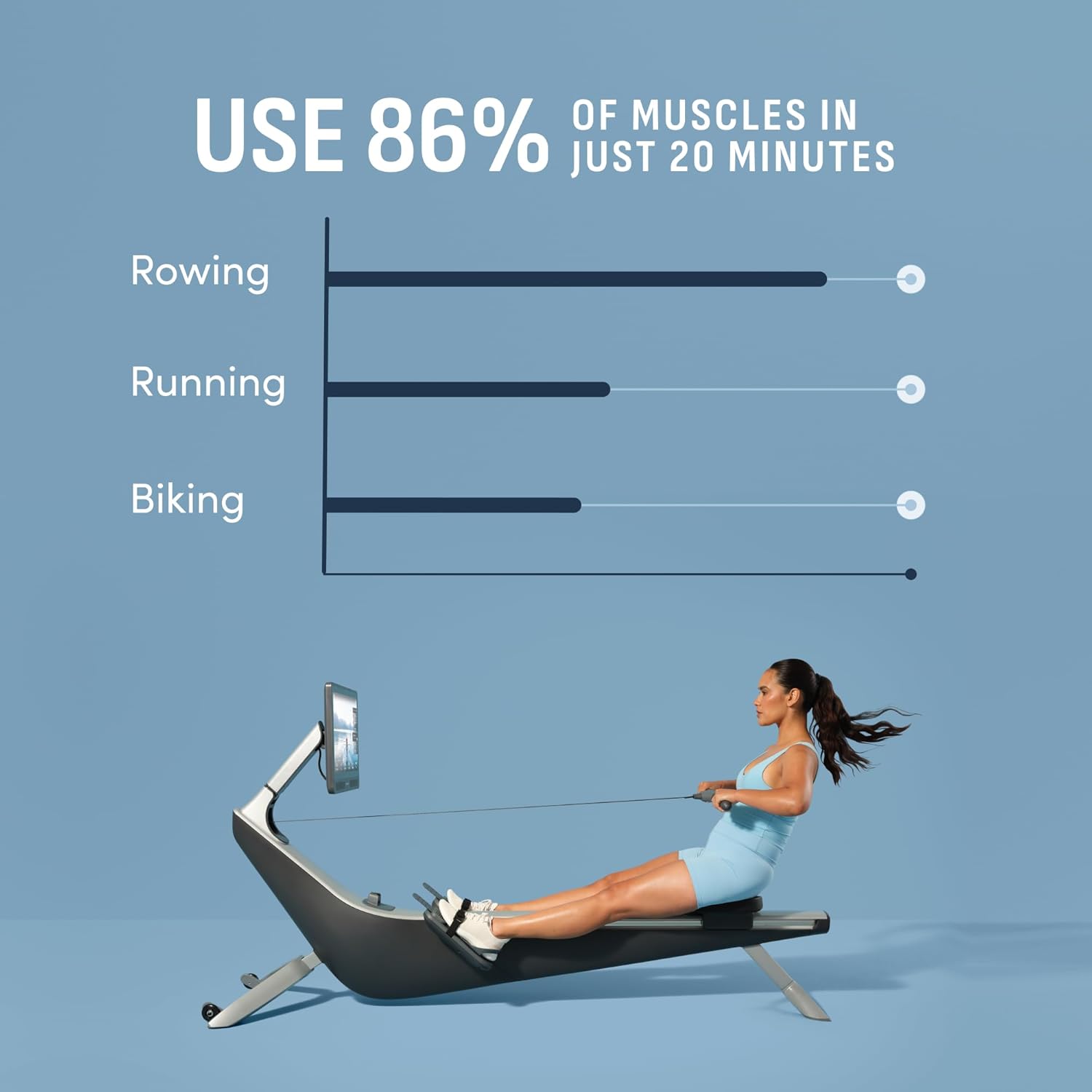
If you’re shopping for a rowing machine and you’ve started looking at the Hydrow ($2,495) or the Ergatta ($2,199), you’ve probably noticed that the purchase price is only the first number you’ll pay. Both machines require a monthly membership — a recurring fee that unlocks the on-screen workouts, performance tracking, and software features that make these rowers worth owning in the first place. Think of it like a gym membership that’s bundled into the machine: skip the subscription and you’re left with a very expensive piece of metal and a dark screen. So the real question isn’t “what does this rower cost?” It’s “what does this rower cost me, over the years I actually plan to use it?” That’s the math we’re going to walk through here — clearly, with real numbers, so you can make a genuinely informed decision before you sign anything.
What You’re Actually Paying For: Hardware vs. Software
Before the numbers, let’s separate the two things you’re buying.
The hardware is the physical rower: the frame, the flywheel or water tank, the monitor, the seat and rail. You pay for this once, upfront (or in installments through financing programs both brands offer). The Hydrow’s $2,495 price gets you a 22-inch HD touchscreen, a magnetic-resistance drive system, and live-row content with on-water footage. The Ergatta’s $2,199 buys you a water-resistance tank built into a walnut frame, a 17.3-inch touchscreen, and a game-based training platform tuned for competitive interval work.
The software subscription is what makes the screen do anything useful. Cancel it, and you’re left with basic manual rowing — no structured programs, no live or on-demand classes (Hydrow), no competitive games or adaptive workouts (Ergatta). Neither machine is designed to be used subscription-free in any meaningful way.
Wirecutter’s 2025 rowing machine guide notes that connected rowers from both brands “require ongoing membership fees that substantially change the total cost of ownership compared to a Concept2, which has no subscription.” That framing is exactly right, and it’s the lens we’ll use throughout.
Current Subscription Rates (May 2026)
| Machine | Monthly Sub | Annual Sub | Annual Sub (per month equivalent) |
|---|---|---|---|
| Hydrow | $44/month | $396/year | $33/month |
| Ergatta | $29/month | $288/year | $24/month |
Rates per brand pricing pages, accessed May 2026. Both brands have adjusted rates at least once in the past 24 months — treat these as a baseline, not a permanent guarantee.
The $15/month delta between the two subscriptions seems small. Annualized, it’s $180. Over five years, it’s $900 — enough to meaningfully shift your total cost comparison.
The Full Five-Year Cost Model
Here’s where you actually run the math. We’ll model three scenarios: paying month-to-month, paying annually, and what happens if subscription prices increase modestly (a historically safe assumption for both brands).
Hydrow: Five-Year True Cost
| Year | Hardware | Sub Cost (monthly billing) | Cumulative Total |
|---|---|---|---|
| Year 1 | $2,495 | $528 | $3,023 |
| Year 2 | — | $528 | $3,551 |
| Year 3 | — | $528 | $4,079 |
| Year 4 | — | $528 | $4,607 |
| Year 5 | — | $528 | $5,135 |
If you switch to annual billing at $396/year, the five-year total drops to $4,475 — a $660 savings versus month-to-month billing over the same period.
Ergatta: Five-Year True Cost
| Year | Hardware | Sub Cost (monthly billing) | Cumulative Total |
|---|---|---|---|
| Year 1 | $2,199 | $348 | $2,547 |
| Year 2 | — | $348 | $2,895 |
| Year 3 | — | $348 | $3,243 |
| Year 4 | — | $348 | $3,591 |
| Year 5 | — | $348 | $3,939 |
Annual billing at $288/year brings the five-year total to $3,639 — a $300 savings over month-to-month.
By the numbers:
- Hydrow five-year cost (annual billing): ~$4,475
- Ergatta five-year cost (annual billing): ~$3,639
- Difference over five years: ~$836 favoring Ergatta
- Ergatta’s lower subscription rate recovers most of its $296 hardware price gap within Year 1
The Price-Increase Risk Factor
Neither Hydrow nor Ergatta has committed to holding subscription rates flat, and the history here is worth paying attention to.
Hydrow increased its monthly subscription rate from $38 to $44 between 2023 and 2025 — a 16% increase in roughly two years. Per Verywell Fit’s updated Hydrow review, reviewers have flagged this recurring cost as one of the key drawbacks for budget-conscious buyers. Ergatta has similarly adjusted its membership pricing over the past few years, though its increases have been smaller in absolute dollar terms.
If you model a conservative 5% annual subscription price increase for both machines — which is below what Hydrow has historically done — the five-year cost picture shifts meaningfully:
- Hydrow (annual billing, 5% annual rate increase): Year 1 at $396, Year 5 at approximately $481 → five-year subscription total climbs to roughly $2,183, pushing total ownership to approximately $4,678
- Ergatta (annual billing, 5% annual rate increase): Year 1 at $288, Year 5 at approximately $350 → five-year subscription total climbs to roughly $1,588, pushing total ownership to approximately $3,787
The gap between the two widens slightly when you build in escalation. Neither scenario is catastrophic — we’re talking about rowers with legitimate premium hardware — but the compounding effect is real enough to include in any honest budget model.
One important nuance: both brands have historically grandfathered early subscribers into lower rates when raising prices for new members. If you lock in annual billing now, you may be insulated from at least the first wave of future increases. That’s worth confirming with each brand’s current terms before you commit.
What You’re Getting for the Money — and Where Each Brand’s Value Lives
The subscription math only tells you how much. You also need to think about what you’re getting for that spend, because the two platforms offer genuinely different experiences.
Hydrow’s $44/month buys access to a library of live and on-demand classes led by professional rowers, filmed on open water. The production quality is legitimately cinematic — the brand markets it as the “Netflix of rowing,” and owners consistently report that the content keeps them coming back. Verywell Fit’s 2025 review specifically notes that the on-water filming is “unlike any other connected rower platform.” If motivation for you comes from immersive content and instructor-led classes, this is where Hydrow earns its premium.
Ergatta’s $29/month takes a different approach: its platform is built around competitive, game-based workouts and personalized adaptive programming. Instead of live classes, you’re racing against the machine, against past versions of yourself, or against other Ergatta users in real-time competitions. Across aggregated owner reviews on fitness forums and retailer review sections, the pattern that emerges is that Ergatta tends to retain users who are internally motivated by data and competition, while Hydrow tends to retain users who need instructor energy and visual engagement to stay consistent.
That’s not a ranking — it’s a fit question. The wrong platform for your psychology will erode your usage rate regardless of how well the hardware performs. A $2,495 rower you use twice a week costs you about $10 per session over five years (on the Hydrow, annual billing model). A $2,199 rower you use twice a month costs you about $41 per session. The subscription isn’t the variable that matters most here — your usage rate is.
The Concept2 Comparison You Probably Need to Run
Any honest conversation about Hydrow and Ergatta’s total cost should at least acknowledge what you’re giving up by not buying a Concept2 RowErg ($900, no subscription required).
Over five years, a Concept2 owner pays $900 total — full stop, assuming no repairs, which the machine’s well-documented durability record makes a reasonable assumption. Wirecutter has recommended the Concept2 RowErg as its top pick for years running, citing its “unmatched reliability and zero subscription cost” as core strengths.
The Hydrow at $4,475 (five years, annual billing) costs you $3,575 more than a Concept2. The Ergatta at $3,639 costs you $2,739 more. Whether that premium is justified depends entirely on whether the content platform meaningfully increases how often you row.
If a connected platform adds three sessions per week to your routine that wouldn’t otherwise happen, the math can favor Hydrow or Ergatta. If you’re a structured athlete who’s going to row regardless of what’s on the screen, the Concept2 wins on total cost without debate. Most serious athletes we’d point toward the Concept2 first — but we’d also acknowledge that “motivation infrastructure” has real value and real ROI for a significant portion of buyers.
If X, Then Y: Your Decision Rule
Run the following checklist before you commit:
If you row primarily for content immersion and instructor motivation → Hydrow’s $44/month platform is purpose-built for you. Budget the full five-year cost (start at ~$4,475 on annual billing) and treat it as the honest number.
If you row primarily for competitive performance data and game-based interval training → Ergatta’s $29/month platform fits your psychology better and costs you roughly $836 less over five years on the same billing cadence. The water resistance also earns consistent praise from owners who prioritize the feel of the stroke.
If you’re not certain you’ll maintain a 3x/week habit → We’d suggest starting with a Concept2 RowErg. No subscription risk, full resale value, and the performance metrics are the gold standard used in competitive rowing worldwide. You can always upgrade once you know your rowing habit is durable.
If price-increase risk matters to you → Annual billing is worth the upfront commitment for either brand, and it’s worth confirming directly with both brands whether long-term subscribers have historically been grandfathered into prior rates when pricing changes occur.
If you’re buying for a commercial setting — a studio, gym, or rowing club — neither Hydrow nor Ergatta is designed for multi-user commercial deployment at scale, and the subscription model compounds awkwardly across a fleet. That conversation leads somewhere else entirely, toward the Concept2 RowErg Sport or Technogym skillRow tier.
The subscription math isn’t complicated. It just takes ten minutes to run — and it’s almost always the number that changes the decision.