April 30, 2026 • Priya Nambiar • 9 min reading time • Prices verified June 18, 2026
Heart Rate Monitors for Rowing: Why Wrist Trackers Fail and Chest Straps Win
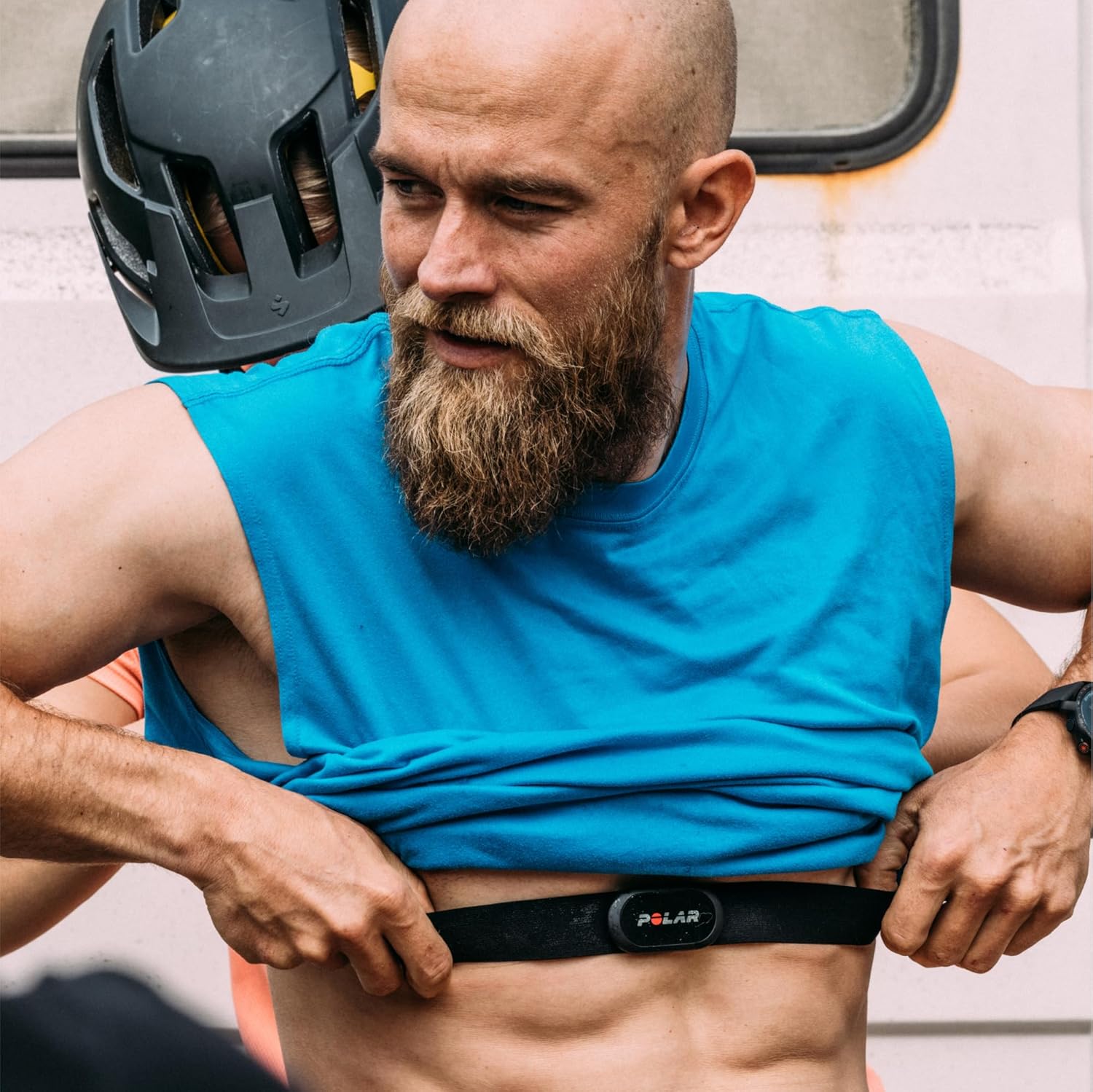
If you’ve ever finished a hard rowing piece and glanced at your fitness watch only to see a heart rate that seems completely wrong — either way too low or spiking to an improbable 210 bpm — you’re not imagining things. Heart rate monitors are devices that measure how fast your heart is beating, which is one of the most useful signals you have for guiding workout intensity. But not all monitors measure equally well during rowing, and the difference matters more than most people realize. This article breaks down why wrist-based optical sensors (the kind built into most fitness watches and fitness bands) consistently underperform during rowing, why chest straps are the more reliable choice, which products earn good marks from the rowing community, and how to pick the right tool for how you actually train.
Why Rowing Is Unusually Brutal on Wrist-Based Monitors
To understand the problem, you need a quick primer on how wrist monitors work. Most fitness watches use something called photoplethysmography — a method, usually shortened to PPG, that shines a green LED light into the skin on your wrist and reads the tiny color changes caused by blood pulsing through the capillaries underneath. It sounds clever because it is. For walking, cycling, or a steady-state run, PPG does a reasonable job.
Rowing breaks the method in two distinct ways.
The motion artifact problem. Every rowing stroke involves a powerful, rhythmic drive of the arms. Your wrist rotates, compresses against the handle, and releases repeatedly — often at a stroke rate of 20 to 30 strokes per minute. That movement creates what engineers call “motion artifact”: vibration and pressure that the optical sensor misinterprets as a heartbeat. The result is signal noise that looks like a heart rate reading but isn’t. Across aggregated reviews from rowing-focused forums and fitness publications, owners of popular smartwatches consistently report readings that lag 10–20 beats per minute behind their actual exertion during hard intervals, or bounce erratically between plausible and impossible values.
The wrist-fit problem. Optical sensors require consistent, firm contact with the skin to get a clean signal. During the drive phase of a rowing stroke, the watch naturally shifts on the wrist. Sweat compounds the issue by acting as a lubricant. Even a small gap between the sensor and skin is enough to corrupt the reading. Runners World’s comparison of chest strap versus wrist heart rate accuracy notes that wrist-based devices are significantly less reliable during “high-intensity, upper-body-dominant exercise” — a description that fits rowing precisely.
Polar Electro’s optical heart rate technology white paper acknowledges that motion artifact is the primary source of inaccuracy in wrist-worn PPG sensors, and that the problem intensifies when the movement is periodic and rhythmic — exactly what a rowing stroke is.
What Chest Straps Do Differently (And Better)
A chest strap uses a completely different technology: electrocardiography, often called ECG or EKG. Instead of reading light reflected off blood, it detects the actual electrical signal that your heart generates with each beat. Your heart is a muscle, and like all muscles it produces a small electrical pulse when it contracts. That pulse travels through your body and can be picked up by electrodes pressed firmly against your skin — in this case, the strap sitting just below your pectorals.
Because the chest strap is measuring the electrical event itself rather than a downstream optical proxy, it isn’t fooled by arm movement or wrist rotation. The chest doesn’t move independently during a rowing stroke; the strap stays put. Signal quality remains high whether you’re doing a relaxed steady-state 10,000-meter piece or sprinting through 8×500m intervals.
The tradeoff is that wearing a strap takes a bit more setup. You need to dampen the electrode contacts slightly (usually with a bit of moisture or electrode gel), position it correctly, and adjust the fit. Most rowing athletes adapt to this quickly and report that after a few sessions it becomes as automatic as putting on a shoe.
By the Numbers
| Monitor Type | Typical Accuracy Error (HR bpm) | Works with Concept2 PM5? | Setup Time |
|---|---|---|---|
| Wrist optical (smartwatch) | ±10–25 bpm during rowing | Requires Bluetooth bridge | 0 seconds |
| Chest strap (ECG) | ±1–3 bpm | Yes, direct ANT+ or Bluetooth | ~30 seconds |
| Arm optical band (upper arm) | ±5–10 bpm | Varies by brand | ~10 seconds |
Error ranges drawn from published manufacturer specifications and aggregated owner reports across fitness review platforms as of 2025–2026.
The Products Worth Knowing About
You don’t need to spend a lot to get accurate ECG data. Here’s how the market breaks down for rowing-specific use.
Polar H10 is the model that comes up most consistently when rowing coaches and competitive ergers discuss what they trust. Published specs put it at ±1 bpm accuracy, and it supports both ANT+ and Bluetooth simultaneously, which matters if you want to connect to both a Concept2 PM5 monitor and a training app at the same time. Concept2’s own PM5 user guide lists compatible heart rate monitors and the H10 is among the explicitly supported devices. Owners in long-run reviews consistently describe it as the benchmark for reliability. Street price as of mid-2026 runs approximately $90–$100.
Polar H9 is a step down in features — single Bluetooth connection rather than dual-protocol, no onboard memory — but shares the same electrode design and accuracy. For athletes who connect to one device at a time, it’s a sensible save at roughly $60.
Garmin HRM-Pro Plus earns strong marks particularly among athletes already in the Garmin ecosystem, where it syncs seamlessly with Garmin watches and platforms like Garmin Connect. Published specs match the H10’s accuracy claims, and it adds running dynamics metrics — less relevant for rowing but a nice bonus if you cross-train. List price runs approximately $130.
Wahoo TICKR X is popular among athletes who train across multiple disciplines. Reviewers at Runner’s World note it as one of the better-value options for people who need broad app compatibility, including support for popular connected fitness platforms. Price sits around $80.
A word on upper-arm optical bands. Devices like the Polar OH1 or Wahoo TRACKR sit between wrist and chest strap: they use optical PPG but mount on the upper arm, which moves less than the wrist during rowing. They perform meaningfully better than wrist watches during rowing intervals, but owners report they still introduce occasional inaccuracies that chest straps avoid entirely. If you find chest straps genuinely uncomfortable, an upper-arm optical is a reasonable compromise. For competitive training or structured programming, we’d still push you toward ECG.
Connecting Heart Rate Data to Your Rowing Machine
This is where the decision gets slightly technical, and it’s worth getting right before you buy.
The Concept2 RowErg PM5 monitor supports heart rate data display natively. It reads signals over both ANT+ and Bluetooth Smart. If you use a chest strap with ANT+ capability (the Polar H10 and Garmin HRM-Pro Plus both qualify), your heart rate appears live on the PM5 screen during your row without any phone or secondary device needed. This is a meaningful practical advantage: you can see power output (measured in watts or split time per 500 meters), stroke rate, and heart rate all on one screen, which is the core data loop for serious interval training.
Hydrow and Ergatta machines use Bluetooth to pull heart rate data into their connected platforms. Both officially support Bluetooth chest straps. Hydrow’s pairing interface is straightforward; Ergatta’s game-based interface displays heart rate as one of its core metrics for its adaptive programming. If you’re on either platform and using structured training programs, accurate heart rate data meaningfully improves how the platform calibrates your output targets.
For WaterRower owners using the S4 or newer monitors, Bluetooth heart rate integration depends on which monitor version you have — worth confirming with WaterRower’s support before assuming compatibility.
Verywellfit’s overview of heart rate zone training explains that the entire value of zone-based workouts depends on knowing your actual heart rate, not a noisy estimate. If your monitor is reading 15 beats low during your threshold intervals, you’re training in a different physiological zone than you intend — and the training stimulus you get is different from the one you planned.
The Decision Rule
Here’s how we’d frame the choice:
If you row with any structured programming — intervals, heart rate zones, split targets, or any plan that uses HR data to govern intensity — buy a chest strap before you buy anything else. The Polar H10 is the default pick. The accuracy difference from a wrist watch is large enough to meaningfully affect how you train.
If you use a Concept2 and want a seamless PM5 display, prioritize ANT+ capability. The H10 and Garmin HRM-Pro Plus both qualify. The H9 works too if you’re only connecting to one device.
If you’re on a connected platform (Hydrow, Ergatta, Wahoo) and connect via phone or tablet, any Bluetooth 4.0 chest strap does the job. The Wahoo TICKR X and Polar H9 are solid sub-$80 choices here.
If you genuinely cannot tolerate a chest strap (some people find them uncomfortable, which is legitimate), move to an upper-arm optical band as your fallback — not a wrist watch. The upper-arm position substantially reduces motion artifact even though it’s still an optical sensor.
If you’re rowing casually at low intensity and aren’t following any structured plan, your current fitness watch is fine for rough trend data. But the moment you’re following a program that targets specific heart rate zones — Harvard Health Publishing’s guidance on target heart rate training specifically flags the importance of accurate zone tracking for meaningful cardiovascular adaptation — the wrist watch becomes a genuine liability rather than a convenience.
The bottom line is straightforward: rowing is harder on wrist monitors than nearly any other exercise because of the combination of rhythmic arm movement and variable wrist pressure. Chest straps sidestep the problem entirely with a different sensing technology that isn’t affected by how your arms move. The cost difference between a reliable ECG strap and a premium smartwatch is inverted — the chest strap is cheaper and more accurate for this specific use case. That’s not a complicated tradeoff.