May 21, 2026 • Priya Nambiar • 8 min reading time • Prices verified June 18, 2026
Foldable Rowing Machines for Small Spaces: What Actually Folds Small Enough
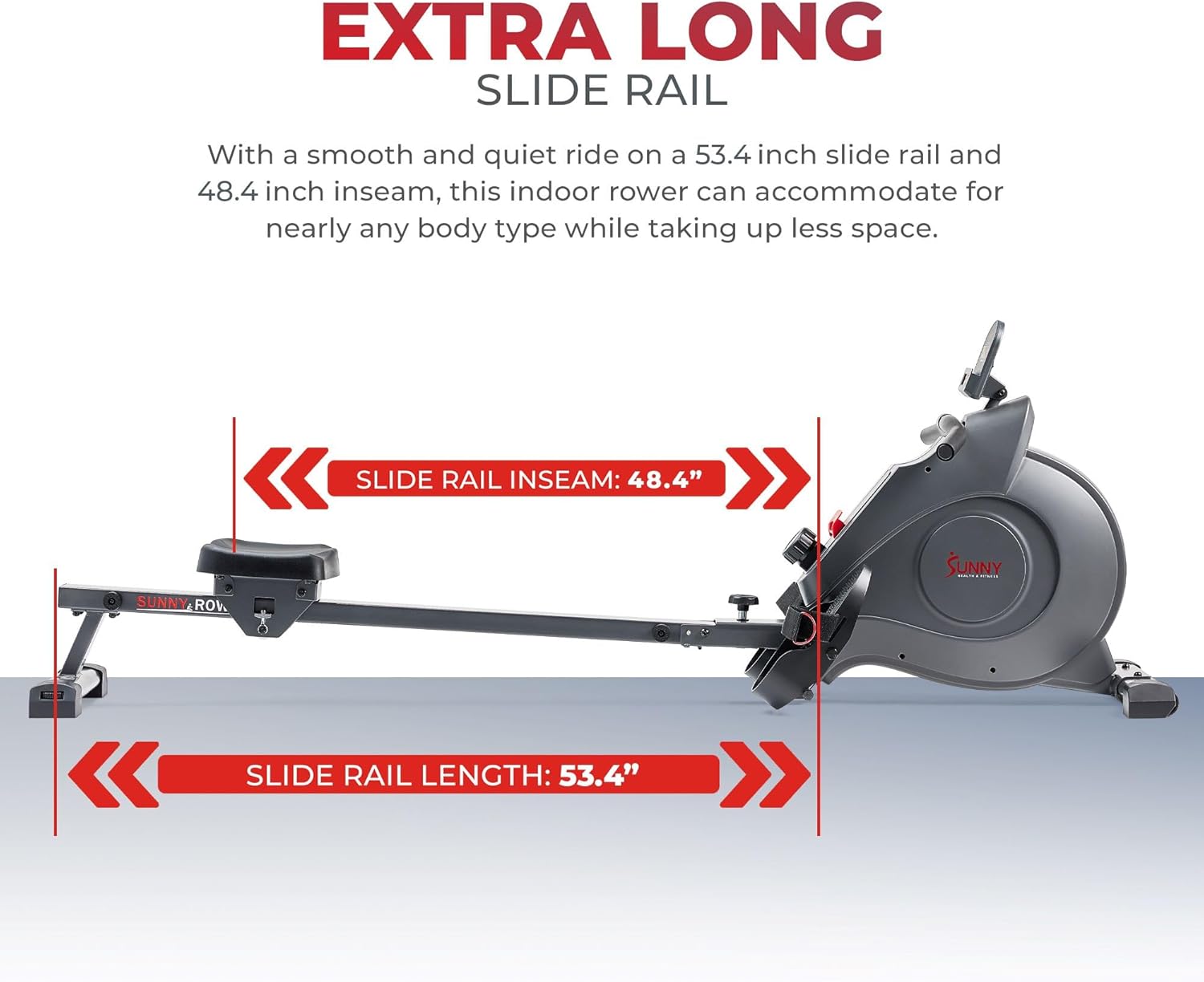
A rowing machine — a piece of exercise equipment that mimics the motion of pulling oars through water — is one of the most effective cardio and strength tools you can own. The problem is that a full-size rower is roughly 8 feet long when in use. That’s a lot of floor real estate if you’re working with a spare bedroom, a condo with no dedicated gym space, or a garage that also needs to fit a car. So manufacturers started building “foldable” rowers: machines that hinge, telescope, or stand upright when you’re done, shrinking their footprint so you can tuck them into a corner. The catch? “Foldable” is a marketing word, not a standard. Some machines fold down to genuinely impressive dimensions. Others pivot into a position that’s technically vertical but still sticks 3 feet into the room. This guide separates the two — and helps you decide whether a fold-up rower is the right trade-off for your training goals.
If you’re already tracking split times (the time it takes to row 500 meters, the standard unit of rowing speed), researching resistance types, and comparing damper settings, you’re in the right place. We’ll get into the numbers and the tradeoffs quickly.
| EDITOR'S PICK[Hydrow Wave Rowing Machine](https://www.amazon.com/dp/B0BHLXDZ2N?tag=greenflower20-20) with… | Mid-tierSunny Health & Fitness Smart Fl… | Budget pickSunny Health & Fitness Flip & F… | |
|---|---|---|---|
| Rail length | — | 50" | — |
| Display | 16" HD touch | — | — |
| Resistance type | — | Magnetic | — |
| Subscription | Required | Free app | Free app |
| Price | $2,295.00 | $299.99 | $249.99 |
| See on Amazon → | See on Amazon → | See on Amazon → |
What “Foldable” Actually Means — and Where the Marketing Gets Sloppy
There are three distinct folding mechanisms on the market, and they perform very differently in practice.
Vertical fold (monorail hinge): The most common design. The sliding rail — the track your seat moves along — folds upward from the middle, so the machine stands on its footprint rather than its full length. Good examples include the NordicTrack RW900 and several Sunny Health & Fitness models. Folded height is typically 40–55 inches, folded footprint roughly 24 × 36 inches. That’s real space savings.
Telescoping rail: The rail itself compresses, shortening the machine’s length without changing its horizontal orientation. Less common, and usually found on budget magnetic-resistance units (magnetic resistance means a magnet creates drag against a flywheel — quiet, consistent, low maintenance). The folded profile is smaller than a standard rower but rarely compact enough to stow vertically.
Stand-upright designs: A newer category. Brands like Cityrow and smaller direct-to-consumer labels market rowers that pivot to stand on their end plates, occupying roughly a 24 × 24-inch floor square. These work well when the ceiling clears 7–8 feet, but reviewers on Verywell Fit note that lighter-framed stand-up rowers sometimes wobble slightly at the base when stood vertically, which matters if you have kids or pets.
By the Numbers: Folded vs. Unfolded Footprint
| Machine | Unfolded Length | Folded Footprint (approx.) | Resistance Type |
|---|---|---|---|
| NordicTrack RW900 | 83 in | 25 × 47 in (vertical) | Magnetic + air combo |
| Sunny SF-RW5515 | 82 in | 19 × 33 in (vertical) | Magnetic |
| ProForm 750R | 77 in | 22 × 47 in (vertical) | Magnetic |
| Concept2 RowErg | 96 in | 25 × 33 in (two-piece, separated) | Air |
The Concept2 entry is instructive: it doesn’t fold in the traditional sense, but it separates into two pieces that stack vertically, occupying a 25 × 33-inch footprint. If you’re a performance-focused rower who refuses to compromise on the PM5 monitor and air resistance, that two-piece storage option is worth knowing about. Wirecutter’s rower guide consistently names the Concept2 RowErg as the top overall pick precisely because it makes few concessions to anyone — and its storage solution, while not a true fold, is more practical than most people assume.
The Resistance Tradeoff: What Foldable Rowers Give Up
Here’s the honest editorial position: most genuinely compact foldable rowers use magnetic resistance, not air or water resistance. That’s not a fatal flaw, but it’s a real one if you train seriously.
Air resistance (used by Concept2 and most competitive ergometers) scales with how hard you pull — row harder, feel more resistance. This self-scaling quality is what makes air-resistance machines the standard in competitive rowing and CrossFit programming. The flywheel that creates this resistance is large, relatively heavy, and does not fold well. That’s why you won’t find a true fold-up air rower.
Water resistance (used by WaterRower, LifeCycle’s Lifecore models, and others) uses paddles spinning in a water tank. The feel is widely described by owners as the most authentic rowing sensation. Water tanks are heavy and structurally integral — folding is essentially not an option. WaterRower’s solid ash-frame Club model isn’t trying to be small; it’s trying to be beautiful and precise, and it succeeds on both counts. It stores upright on its own (the design allows it to stand on its end), but the footprint while standing is about 24 × 22 inches with a height over 7 feet — workable in rooms with standard 8-foot ceilings, tight in anything lower.
Magnetic resistance dominates the foldable category because the magnet-and-flywheel system can be made compact and light. The resistance is adjusted electronically (on connected models) or manually via a dial. Owners consistently report that magnetic rowers feel smooth and quiet — ideal for apartments where noise is a genuine constraint. What they don’t replicate is the dynamic self-scaling quality of air. At a fixed resistance level, a hard pull and an easy pull feel proportionally different but not as dramatically so as on an air erg. For general fitness, HIIT workouts, and low-impact cardio, this is a non-issue. For athletes training to specific split-time targets or watts, it’s a meaningful gap.
Men’s Health’s roundup of home rowing machines flags this tradeoff directly: their editors note that magnetic rowers are excellent for the majority of home users but caution competitive rowers that training metrics won’t translate 1:1 to on-water or Concept2 performance.
The Connected-Screen Question: Is It Worth It in a Small-Space Machine?
Several foldable rowers now ship with large touchscreens and subscription-based workout libraries. The NordicTrack RW900 has a 22-inch rotating screen and requires an iFit membership (currently around $39/month for a household plan as of mid-2026, though NordicTrack has adjusted iFit pricing multiple times — verify current rates before committing). Hydrow’s Wave is marketed partly on its compact-for-a-connected-rower footprint at 86 × 25 inches, though it does not fold — it’s simply shorter than the standard Hydrow. At $1,495 plus a $44/month membership, it’s a significant investment for a small-space buyer.
The Shape magazine rower roundup makes a point worth internalizing here: connected rowers with large screens depreciate faster than non-connected models because their value proposition is tied to the software ecosystem. If the subscription changes — price increases, content library shifts, company pivots — a $1,495 connected rower becomes a $1,495 magnetic rower with a screen. That’s not a reason to avoid them, but it’s a reason to stress-test the subscription cost over 3–5 years before signing on.
For purely small-space buyers who don’t care about the screen, the Sunny Health & Fitness SF-RW5515 draws consistent praise in aggregated reviews for its fold mechanism, quiet magnetic resistance, and sub-$400 price point. It won’t give you a PM5 monitor or competitive-grade data, but it folds to a genuinely small footprint and owners report it holds up well under regular use.
Decision Framework: Which Foldable Rower for Your Situation
If you’re under LOI on a home gym build, finalizing a condo renovation, or simply trying to close the loop on this decision, here’s the if/then matrix:
If you’re a performance athlete who trains to split times and watts: The Concept2 RowErg’s two-piece separation is your best bet. It doesn’t technically fold, but it stores in a 25 × 33-inch standing footprint, it gives you the industry-standard PM5 monitor, and you’re not sacrificing data quality. Accept the slight assembly step as the price of not compromising your training.
If noise is your primary constraint (apartment, shared walls, early-morning sessions): Go magnetic. The NordicTrack RW900 or Sunny SF-RW5515 fold well and operate nearly silently. The RW900 adds the connected screen if you want coached workouts; the Sunny keeps it simple and affordable if you don’t.
If you want the water-resistance feel in a small space: WaterRower’s stand-up storage is the most practical option, but confirm your ceiling height clears 7.5 feet with a few inches of margin. At around $1,200 for the Natural or Club models, you’re paying for craftsmanship and feel, not foldability per se.
If you’re outfitting a commercial space or boutique studio with limited floor space: Foldable consumer-grade rowers are not appropriate for commercial use — warranty terms and duty cycles (the amount of daily use a machine is rated for) don’t support multi-user environments. Concept2 RowErg Sport, rated for commercial use and priced around $900, remains the practical floor for institutional buyers. It doesn’t fold, but Concept2’s two-piece design means fleet storage is manageable even in tight boathouses.
If you’re primarily motivated by aesthetics and the rower is part of a premium home design: The WaterRower in solid ash or walnut stands upright and looks like furniture — reviewers consistently cite its visual profile as unmatched in the category. The Hydrow Wave is a credible alternative if you want the cinematic screen experience in a slightly shorter chassis. Neither folds, but both store with more visual grace than a folded magnetic rower parked against a wall.
The foldable rower market has matured enough that you can find genuinely compact options at most price points. The variable that most guides undersell is this: the fold mechanism only matters when the machine is stored. What matters every other minute is the resistance quality, the monitor, and whether the machine matches your training intent. Get those right first, then confirm the folded dimensions fit your space. In most cases, if a machine passes the training test, its storage footprint will be workable — especially with the Concept2’s two-piece option available as a high-performance safety valve.