May 23, 2026 • Priya Nambiar • 10 min reading time • Prices verified June 18, 2026
Concept2 RowErg vs Budget Air Rowers: Why the PM5 Monitor Changes Everything
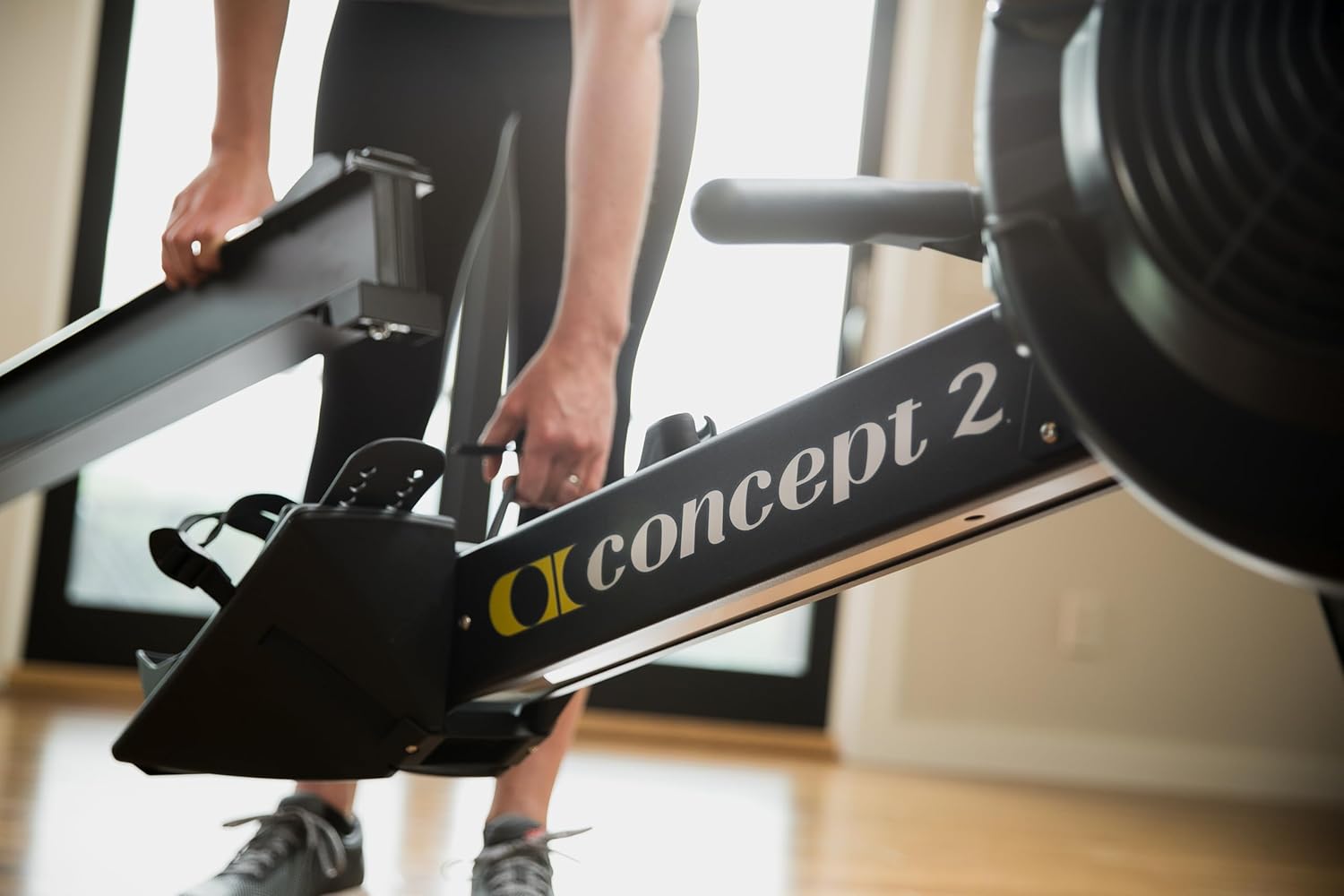
If you’ve been shopping for a rowing machine, you’ve probably noticed a wide gap between a $250–$400 “air rower” sold through major online retailers and the Concept2 RowErg, which retails for around $900. A rowing machine — any rowing machine — is a piece of exercise equipment that mimics the motion of rowing a boat: you pull a handle attached to a chain or belt, and resistance pushes back against you. “Air resistance” specifically means a fan-style flywheel — think a small turbine inside a cage — that gets harder to pull the faster you row. At first glance, a cheaper air rower and the Concept2 look nearly identical. So why does the price gap exist, and does it actually matter for your training? This article answers that directly. We’ll walk through the specific features — especially the PM5 performance monitor — that separate the RowErg from budget competitors, compare both tiers honestly, and give you a clear decision rule at the end so you know exactly which direction to go.
What “Budget Air Rower” Actually Means in 2026
Before we compare, let’s define the field. When we say “budget air rowers,” we mean machines in the $250–$550 range with a fan flywheel — brands like Sunny Health & Fitness, Stamina, and various white-label imports. These aren’t magnetic rowers (which use magnets to create resistance and tend to be quieter but feel less athletic) or water rowers (which spin paddles through a tank of water for a fluid, wave-like resistance curve). They’re genuine air-resistance machines, so the basic physics of the rowing stroke is similar to the RowErg.
The honest case for budget air rowers is not nothing. Verywell Fit’s Rowing Machine Buying Guide notes that air rowers in this price tier deliver the core cardiovascular benefit of rowing and are appropriate for beginners building an aerobic base who don’t yet have a structured training program. If you row three times a week for general fitness and don’t track splits, watts, or interval targets, a budget air rower will move air and burn calories.
The case against them becomes clear once you ask two questions: How do you know if you’re improving? And How long will this machine last?
H3-Level Comparison: Three Tiers of Air Rower
To make the tier differences concrete, here is how the three spending levels actually break down against the features that determine long-term training value.
Budget Air Rowers ($250–$450)
Machines in this range — white-label imports and entry-level branded models — share a common profile: a fan flywheel, a basic LCD monitor displaying calories burned and strokes per minute, a steel frame with a 1–3 year warranty, and limited or no app connectivity. The monitors are not calibrated to any external standard, meaning two different budget rowers can show the same calories burned while requiring meaningfully different effort. Replacement parts are rarely stocked by manufacturers, and white-label brands frequently discontinue SKUs, leaving owners with no repair path if the chain, seat rollers, or monitor fail after the warranty expires.
Verywell Fit’s Rowing Machine Buying Guide specifically flags uncalibrated calorie displays as a common limitation in this price tier, noting that the numbers are “estimates” that vary substantially by machine. For general fitness use where no performance benchmark matters, that limitation is tolerable. For anyone following a program, it is disqualifying.
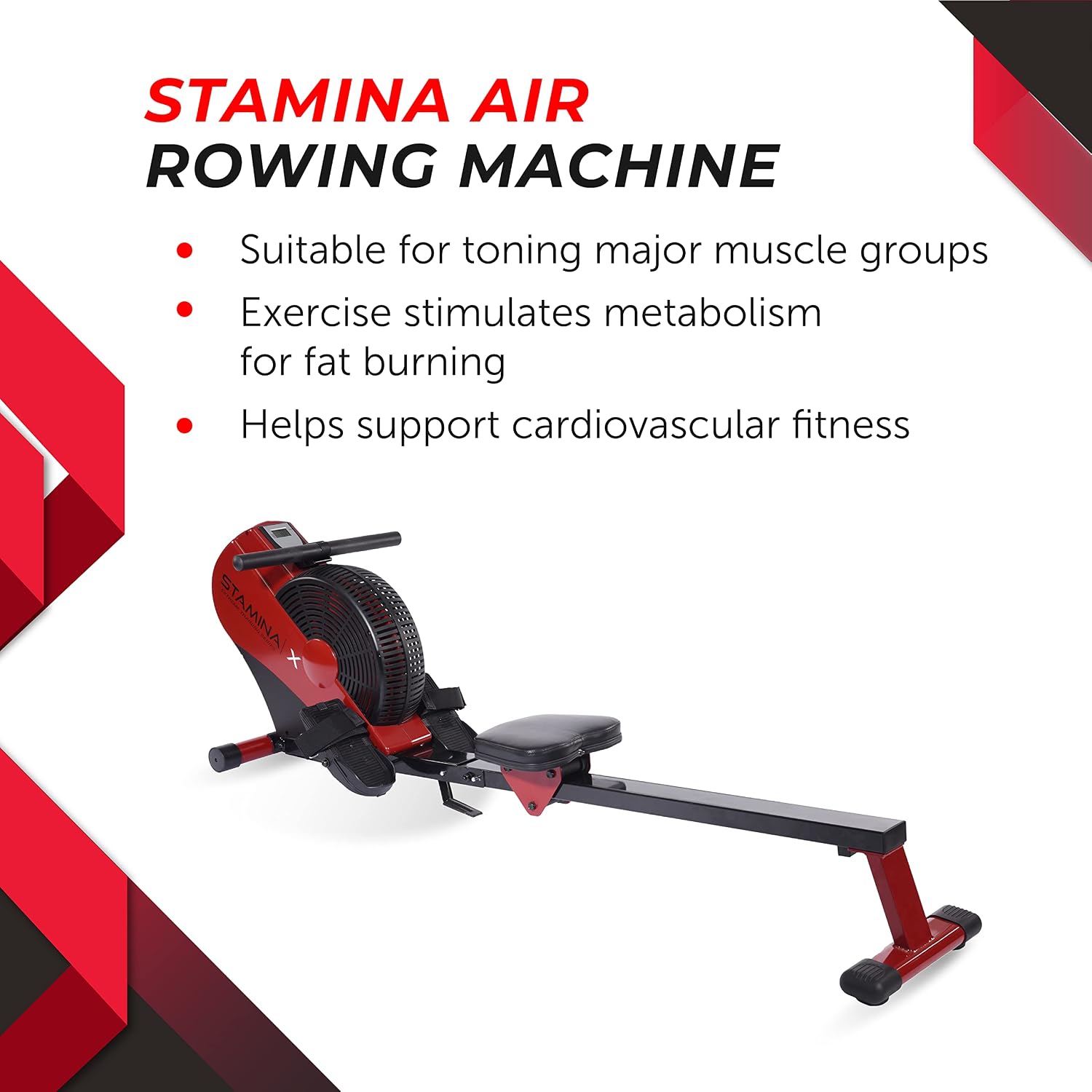
Stamina
$379.99
In stock on Amazon
Check price on AmazonMid-Tier Air Rowers ($500–$700)
A smaller category than most shoppers realize. A handful of brands — including some models from Sunny Health & Fitness and newer entrants — have released air rowers with improved monitor displays, Bluetooth connectivity, and longer warranties in an attempt to close the gap with the RowErg. These machines often claim compatibility with fitness apps and advertise split-pace display.
The honest assessment: mid-tier rowers improve on the baseline but do not replicate the PM5 ecosystem. App connectivity in this segment is inconsistently implemented; user reports across fitness communities consistently describe unreliable pairing and data that doesn’t sync reliably to third-party platforms. The monitors in this range display split pace, but the underlying drag factor calibration — the system that ensures a stated pace is actually comparable across machines and over time — is not standardized the way the PM5’s drag factor measurement is. Runner’s World’s Best Rowing Machines buying guide notes that the RowErg’s drag factor system, which measures actual air resistance rather than approximating it, is a key reason its data is trusted in competitive contexts while competitors’ data is not.
 product image](/images/external/bb2846b06931.jpg)
MERACH
$529.99
In stock on Amazon
Check price on AmazonPremium Tier: Concept2 RowErg (~$900)
The RowErg is not primarily a flywheel attached to a frame. It is a performance monitoring system that happens to come with a flywheel and frame. The PM5 — Performance Monitor 5 — is the differentiating asset, and once you understand what it does, the price calculation shifts.
Watts and split pace, defined. The PM5 displays output in watts (a measure of power — higher watts mean more work per second) and in “split pace,” the time it would take to row 500 meters at current intensity. These two numbers are the universal language of competitive rowing worldwide. When a coach prescribes a 1:55/500m split or a training program targets 200 watts, the PM5 is the device that tells you whether you’re actually hitting it. Concept2’s PM5 product documentation confirms the drag factor system is designed to produce consistent, comparable data across every RowErg ever manufactured — a 2:00/500m on a RowErg in Boston is the same physiological effort as a 2:00/500m on a RowErg in Seoul.
Connectivity. The PM5 connects via Bluetooth and ANT+ — two wireless protocols that allow devices to communicate; Bluetooth is the same standard your headphones use, ANT+ is common in cycling computers and heart rate straps — to Concept2’s free ErgData mobile app, the Concept2 Logbook (a permanent online training record), and dozens of third-party training platforms used by rowing clubs, CrossFit programs, and collegiate athletic departments. Workout data logs automatically. Over months and years, that logbook becomes a genuine performance archive.
Wirecutter’s Best Rowing Machine review (New York Times, Wirecutter) specifically cites the PM5’s data ecosystem as a primary reason the RowErg holds its top overall pick position despite cheaper alternatives existing at lower price points. Runner’s World’s Best Rowing Machines buying guide echoes this, noting the RowErg’s durability record in commercial and institutional settings is essentially unmatched in the category.
Durability and resale. Concept2’s frame warranty runs five years, with two years on parts. The RowErg’s chain, seat rollers, and footrests are individually listed replacement components available directly from Concept2. Rowing clubs and university athletic programs routinely report RowErgs running for 15–20 years with standard maintenance — chain oiling and occasional roller replacement. A used RowErg in good condition regularly lists on secondary markets at $500–$700, roughly 55–75% of purchase price after years of use. A used budget air rower typically sells for $50–$100 if it sells at all. The net five-year cost of the RowErg, if sold in good condition, can approach $200–$400 total. The budget machine’s net cost is its full purchase price.
Concept2
$990.00
In stock on Amazon
Check price on AmazonThe PM5 Monitor: The Feature That Makes Structured Training Possible
It’s worth dwelling on the monitor question specifically, because it’s the difference that compounds over time.
Budget rower monitors display calories and strokes per minute. Those numbers are approximations, calibrated to no external standard, and not comparable between machines or athletes. You cannot join an online rowing challenge, compare a workout to a training partner’s result, or follow a serious training plan with a calorie counter as your only feedback. The PM5, as documented in Concept2’s official product specifications, uses a measured drag factor — the actual aerodynamic resistance your flywheel is producing in that session — to calculate pace and power output in real time. That measured drag factor is why RowErg data transfers meaningfully to coaches, apps, and competitors worldwide.
The practical consequence: the people who progress fastest on rowing machines are the ones who can see their output data in real time and adjust stroke by stroke. Without split pace and watts on a calibrated monitor, you’re rowing by feel. That slows skill development and makes structured programming — any programming that prescribes a target output — impossible to follow accurately.
Verywell Fit’s Rowing Machine Buying Guide notes that real-time performance feedback is one of the primary advantages of higher-end rowing monitors for intermediate and advancing users. Wirecutter’s Best Rowing Machine review describes the PM5’s feedback loop as a reason that RowErg owners are more likely to maintain consistent training habits over time.
Where Budget Air Rowers Make Sense: An Honest Assessment
We’re not going to tell you every buyer needs a RowErg. There are legitimate cases for a budget machine.
Strict budget constraints. If your total home-gym budget is $500 and you need to allocate across multiple equipment categories, a $300 air rower delivers the cardiovascular benefit of rowing without monopolizing resources. General fitness does not require competitive-grade data.
Short-term trial. If you genuinely don’t know whether you’ll enjoy rowing and you’re risk-averse about a $900 commitment, a $300 entry point is a reasonable hedge. We would note — and the resale math above supports this — that the RowErg’s resale floor makes it a lower-risk buy than it first appears. But the psychology of a lower initial number is real and worth naming.
Children and low-intensity rehabilitation. Verywell Fit notes that lower-resistance air rowers can be appropriate for lighter users or gentle movement recovery where range of motion, not performance output, is the goal.
What we’d push back on: the idea that a budget air rower is adequate “until you get serious.” In practice, the transition point — when you want to follow a real program — arrives faster than most new rowers expect, and at that point you’re either buying the RowErg anyway or continuing to train without feedback that the training is working.
The Decision Rule
Buy the RowErg if any of the following are true:
- You plan to follow a structured training program that prescribes specific split times or wattage targets.
- You want to compare your performance to others — online challenges, a rowing club, CrossFit benchmarks, or a training partner.
- You’re a commercial or institutional buyer; the RowErg’s durability record and parts availability make budget machines a false economy at scale.
- You expect to own the machine for more than two years. The resale floor and durability record make the RowErg the lower total-cost option over a realistic ownership window.
A budget air rower is defensible if both of the following are true:
- Your goal is general cardiovascular fitness with no performance tracking requirements.
- Your budget is genuinely constrained below $600 after accounting for other equipment needs.
One more consideration: if your hesitation about the RowErg is aesthetic — the industrial look of a metal flywheel cage isn’t what you envisioned for your space — the answer probably isn’t a budget air rower either. You may be describing a WaterRower or a Hydrow, which trade some of the RowErg’s data precision for a premium feel and visual design. That’s a separate comparison worth its own article.
For the direct question this article set out to answer: the $550 price premium over a budget air rower is justified — not because the RowErg’s flywheel is dramatically superior (it isn’t), but because the PM5 monitor converts a simple exercise machine into a precision training tool backed by a 20-year support ecosystem. The monitor is the product. The flywheel and frame are the delivery mechanism.
If you’re at the decision point and still uncertain, the Concept2 Logbook — free, online, accessible at concept2.com — lets you browse workout data logged by millions of users worldwide. Seeing what the data ecosystem looks like in actual practice tends to settle the question faster than any spec comparison.